HOMEOWNER LEARNING CENTER
Geothermal Information
Understand ground-source heating and cooling, plan a project, compare proposals, solve common problems safely, and find location-specific information without duplicating the full guides.

A practical path through geothermal decisions
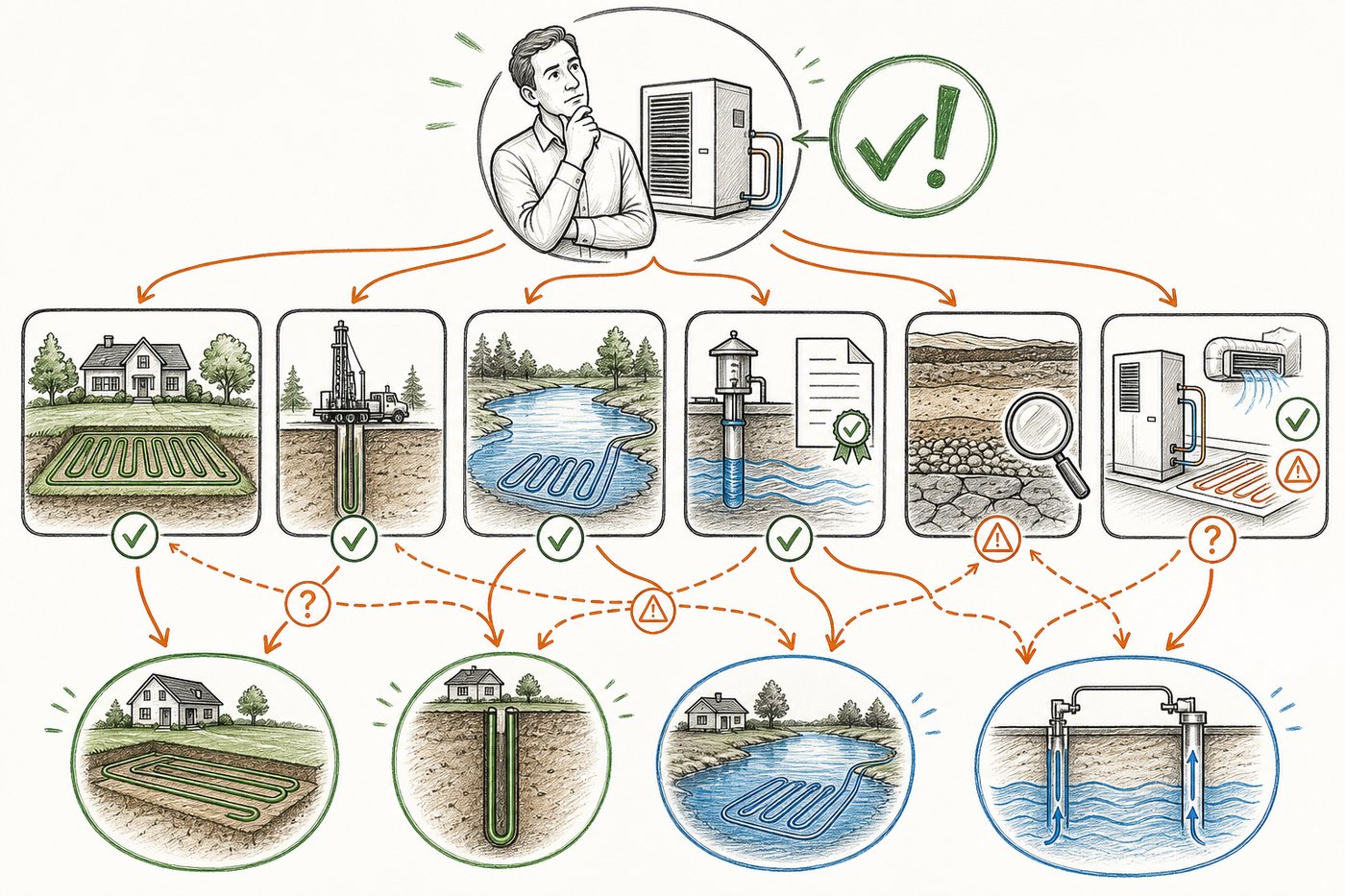
Start with the fundamentals: what the indoor heat pump and ground loop do in heating and cooling, how ground-source differs from air-source equipment, and why loads, distribution, controls, and backup heat matter. Then move from technology to your home and site.
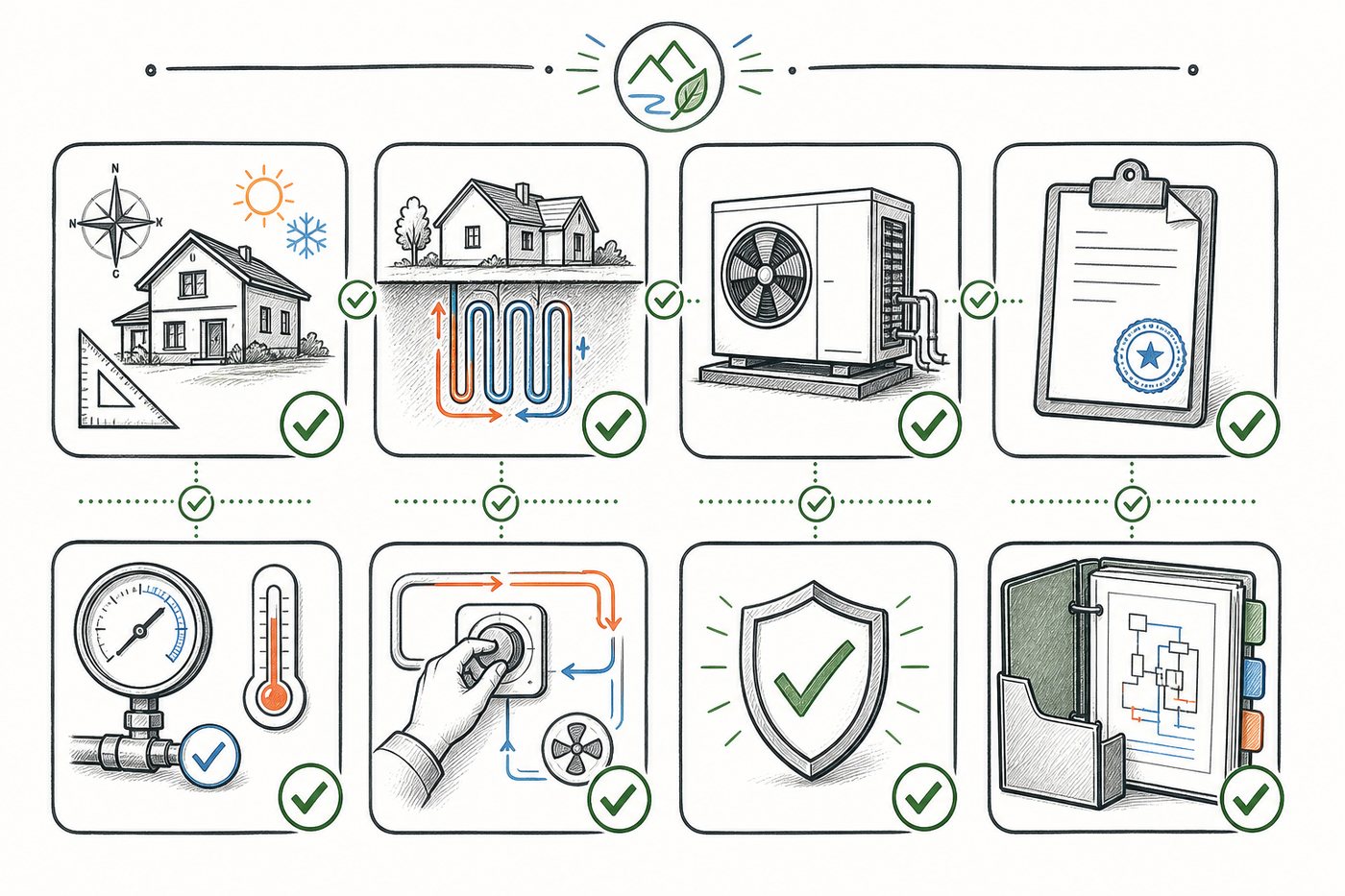
For a new project, compare the full cost and scope of equipment, drilling or excavation, loops, ducts, electrical work, permits, restoration, commissioning, warranties, and service. Use the installer-selection and red-flags guides to distinguish a documented design from a sales estimate.
For an existing system, use the FAQs for safe homeowner observations and escalation. Fault codes, breaker trips, water, airflow, noise, auxiliary heat, energy use, and loop symptoms can overlap; avoid repeated resets and parts swapping without measured diagnosis.
Choose the resource that matches your question
- Geothermal fundamentals: understand heat exchange, indoor equipment, horizontal and vertical loops, open loops, heating, cooling, backup heat, hot water, and efficiency terms.
- Installation and costs: identify quote components, site variables, new-construction and retrofit differences, operating assumptions, and lifecycle questions.
- Pros and cons: weigh efficiency, comfort, quiet operation, underground infrastructure, first cost, disruption, service, maintenance, and alternatives.
- Finding an installer: evaluate geothermal experience, loads, loop design, subcontractors, proposals, commissioning, warranties, references, and support.
- FAQs and troubleshooting: find safe checks for no heat or cooling, controls, breakers, auxiliary heat, runtime, energy use, water, noise, airflow, loops, maintenance, repair, and replacement.
- Red flags: recognize weak proposals, unsafe reset advice, unresolved airflow or loop faults, unsupported savings promises, and replacement without diagnosis.
- Geographic information: browse installer and guide context by state, county, city, and ZIP while confirming current local permits and rules with responsible authorities.
- Glossary and articles: define technical terms and explore additional national and state homeowner guides without duplicating their full content here.
Keep the decision evidence-based
A useful geothermal answer connects the home's loads, site, ground or water conditions, distribution, electrical service, equipment, controls, backup heat, contractor capacity, budget, and long-term service. No national rule of thumb can replace that evaluation.
Keep load calculations, site drawings, loop records, exact models, permits, pressure tests, startup measurements, control settings, warranties, maintenance, and repair history. These records help the next technician distinguish equipment, loop, airflow, pumping, electrical, and controls instead of diagnosing by guesswork.