GEOTHERMAL GLOSSARY
Geothermal Glossary
Homeowner-friendly geothermal glossary with category cards and a complete A-Z index.


- ACCA
- Standards, certifications, and contractors. ACCA identifies a professional role, certification, standard, or rating organization that may appear in geothermal proposals. It helps homeowners understand who is qualified for design, drilling, HVAC installation, electrical work, commissioning, or equipment verification.
- AHRI
- Standards, certifications, and contractors. AHRI identifies a professional role, certification, standard, or rating organization that may appear in geothermal proposals. It helps homeowners understand who is qualified for design, drilling, HVAC installation, electrical work, commissioning, or equipment verification.
- Accredited Geothermal Installer
- Standards, certifications, and contractors. Accredited Geothermal Installer identifies a professional role, certification, standard, or rating organization that may appear in geothermal proposals. It helps homeowners understand who is qualified for design, drilling, HVAC installation, electrical work, commissioning, or equipment verification.
- Air Handler
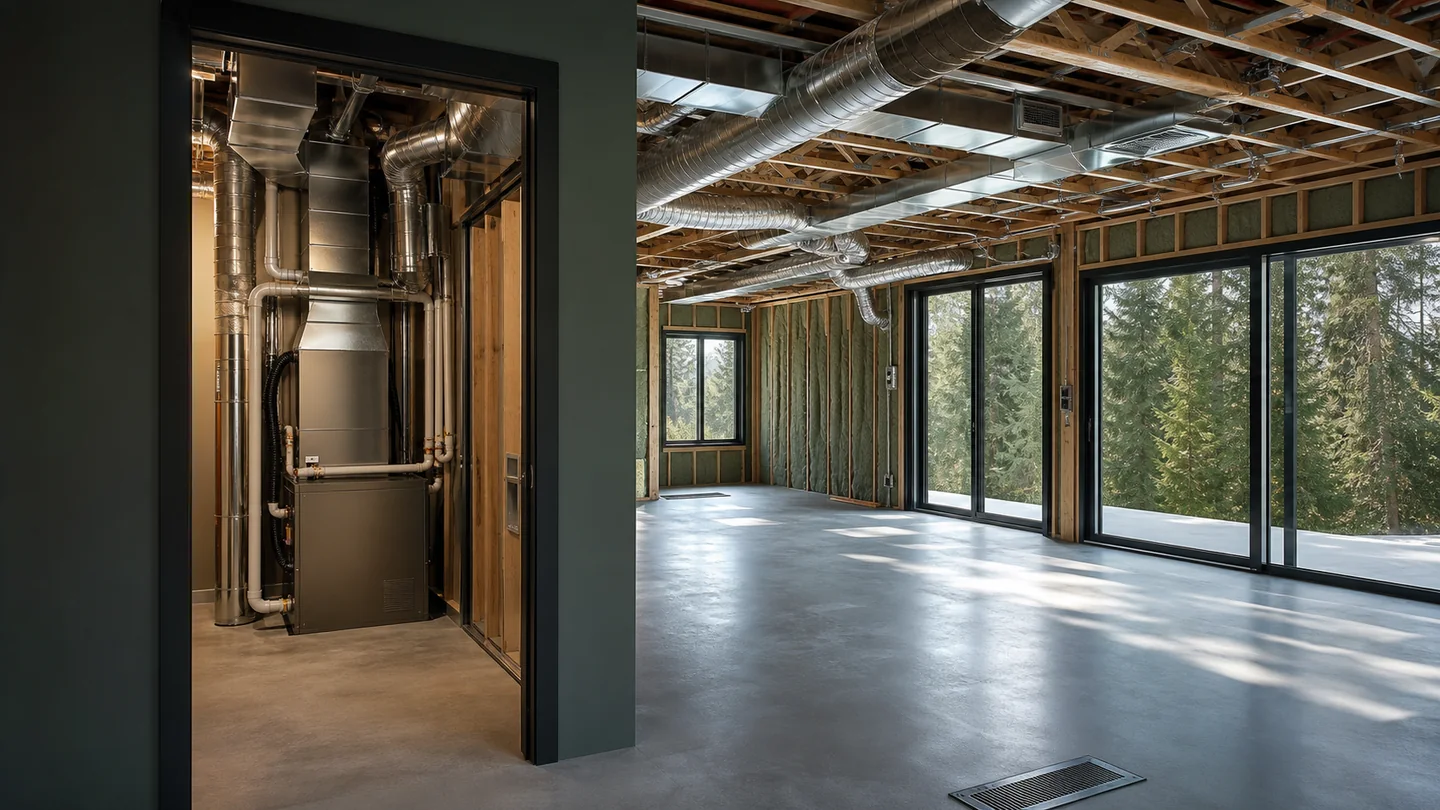
- System parts. An air handler is the indoor blower and coil cabinet that moves conditioned air through ductwork. In a geothermal system it may be built into a water-to-air unit or paired with a split heat pump, and it must be matched to duct sizing and airflow needs.
- Air Leakage
- Design and sizing. Air Leakage is a design value used to match the geothermal equipment, ground loop, pumping, controls, and indoor distribution to the actual house. Homeowners should ask where the value came from and whether it is documented in the proposal.
- Air Removal
- Installation and commissioning. Air Removal is an installation or startup step used to prove the geothermal system was built, cleaned, filled, tested, or documented correctly. It should appear in the scope of work or closeout package when it affects future service.
- Airflow
- Indoor comfort and distribution. Airflow describes the indoor side of comfort delivery: airflow, ducts, hydronics, zoning, humidity control, or room distribution. Geothermal equipment can only perform well when the indoor distribution system can deliver the required heating and cooling quietly and evenly.
- Antifreeze Concentration
- Installation and commissioning. Antifreeze Concentration relates to freeze protection for closed-loop geothermal fluid. The installer should document the product, concentration, freeze-protection target, safety handling, and final test reading.
- Aquifer
- Soil, geology, and site conditions. Aquifer is a site condition that can influence trenching, drilling, loop sizing, water management, restoration, or permitting. It does not automatically prevent geothermal installation, but it should be evaluated before the design and price are finalized.
- As Built Loop Map
- Installation and commissioning. As Built Loop Map is an installation or startup step used to prove the geothermal system was built, cleaned, filled, tested, or documented correctly. It should appear in the scope of work or closeout package when it affects future service.
- Auxiliary Heat
- System parts. Auxiliary Heat is supplemental heat used when the geothermal heat pump cannot meet the thermostat demand by itself or when controls call for backup operation. It should be clearly documented because excessive backup heat can raise operating costs.
- Backfill
- Installation and commissioning. Backfill is an installation or startup step used to prove the geothermal system was built, cleaned, filled, tested, or documented correctly. It should appear in the scope of work or closeout package when it affects future service.
- Backup Heat
- System parts. Backup Heat is supplemental heat used when the geothermal heat pump cannot meet the thermostat demand by itself or when controls call for backup operation. It should be clearly documented because excessive backup heat can raise operating costs.
- Balance Point
- Design and sizing. Balance Point is a design value used to match the geothermal equipment, ground loop, pumping, controls, and indoor distribution to the actual house. Homeowners should ask where the value came from and whether it is documented in the proposal.
- Bedrock
- Soil, geology, and site conditions. Bedrock is a site condition that can influence trenching, drilling, loop sizing, water management, restoration, or permitting. It does not automatically prevent geothermal installation, but it should be evaluated before the design and price are finalized.
- Bin Hours
- Design and sizing. Bin Hours is a design value used to match the geothermal equipment, ground loop, pumping, controls, and indoor distribution to the actual house. Homeowners should ask where the value came from and whether it is documented in the proposal.
- Bore Log
- Installation and commissioning. Bore Log is a drilling record that describes subsurface conditions encountered during borehole or well work. It can help future service providers understand depth, formations, water zones, grout, casing, or completion details.
- Borehole Heat Exchanger
- Loop types. Borehole Heat Exchanger is a geothermal loop or water-source configuration used to exchange heat with the earth or an approved water source. The best option depends on available land, drilling conditions, water availability, permitting, access, and professional loop design.
- Buffer Tank
- System parts. Buffer Tank is a water-storage component used in some geothermal or hydronic designs to stabilize flow, temperature, or run time. Homeowners should confirm tank purpose, size, insulation, piping, and controls rather than assuming every system needs one.
- Building Envelope
- Design and sizing. Building Envelope is a design value used to match the geothermal equipment, ground loop, pumping, controls, and indoor distribution to the actual house. Homeowners should ask where the value came from and whether it is documented in the proposal.
- CFM
- Indoor comfort and distribution. CFM describes the indoor side of comfort delivery: airflow, ducts, hydronics, zoning, humidity control, or room distribution. Geothermal equipment can only perform well when the indoor distribution system can deliver the required heating and cooling quietly and evenly.
- CSA/ANSI/IGSHPA C448
- Standards, certifications, and contractors. CSA/ANSI/IGSHPA C448 identifies a professional role, certification, standard, or rating organization that may appear in geothermal proposals. It helps homeowners understand who is qualified for design, drilling, HVAC installation, electrical work, commissioning, or equipment verification.
- Caliche
- Soil, geology, and site conditions. Caliche is a site condition that can influence trenching, drilling, loop sizing, water management, restoration, or permitting. It does not automatically prevent geothermal installation, but it should be evaluated before the design and price are finalized.
- Certified Geoexchange Designer
- Standards, certifications, and contractors. Certified Geoexchange Designer identifies a professional role, certification, standard, or rating organization that may appear in geothermal proposals. It helps homeowners understand who is qualified for design, drilling, HVAC installation, electrical work, commissioning, or equipment verification.
- Certified Vertical Closed Loop Driller
- Standards, certifications, and contractors. Certified Vertical Closed Loop Driller identifies a professional role, certification, standard, or rating organization that may appear in geothermal proposals. It helps homeowners understand who is qualified for design, drilling, HVAC installation, electrical work, commissioning, or equipment verification.
- Circulation Pump
- System parts. Circulation Pump is part of the pumping package that moves loop fluid between the heat pump and the ground loop or water-side piping. It matters because poor pumping design can waste electricity, reduce heat transfer, and cause flow alarms.
- Clay Soil
- Soil, geology, and site conditions. Clay Soil is a site condition that can influence trenching, drilling, loop sizing, water management, restoration, or permitting. It does not automatically prevent geothermal installation, but it should be evaluated before the design and price are finalized.
- Coastal Plain
- Soil, geology, and site conditions. Coastal Plain is a site condition that can influence trenching, drilling, loop sizing, water management, restoration, or permitting. It does not automatically prevent geothermal installation, but it should be evaluated before the design and price are finalized.
- Commissioning
- Installation and commissioning. Commissioning is an installation or startup step used to prove the geothermal system was built, cleaned, filled, tested, or documented correctly. It should appear in the scope of work or closeout package when it affects future service.
- Commissioning Agent
- Standards, certifications, and contractors. Commissioning Agent identifies a professional role, certification, standard, or rating organization that may appear in geothermal proposals. It helps homeowners understand who is qualified for design, drilling, HVAC installation, electrical work, commissioning, or equipment verification.
- Compaction
- Installation and commissioning. Compaction is an installation or startup step used to prove the geothermal system was built, cleaned, filled, tested, or documented correctly. It should appear in the scope of work or closeout package when it affects future service.
- Cooling Load
- Design and sizing. Cooling Load describes part of the heating or cooling demand the geothermal system must satisfy. Accurate load information helps prevent comfort complaints, short cycling, unnecessary backup heat, and poor humidity control.
- Cooling Mode
- Geothermal basics. Cooling mode is when the geothermal heat pump removes heat from the home and rejects it to the ground loop or water source. Good cooling performance depends on the indoor airflow, refrigerant circuit, loop temperature, humidity control, and controls setup.
- Dehumidification
- Indoor comfort and distribution. Dehumidification describes the indoor side of comfort delivery: airflow, ducts, hydronics, zoning, humidity control, or room distribution. Geothermal equipment can only perform well when the indoor distribution system can deliver the required heating and cooling quietly and evenly.
- Demand Water Heating
- Geothermal basics. Demand water heating usually refers to water heating that responds when hot water is needed rather than storing large amounts of hot water. In geothermal discussions, homeowners should confirm whether the contractor means a separate tankless water heater, a buffer/preheat tank, or heat-pump water-heater integration.
- Design Temperature
- Design and sizing. Design Temperature is a design value used to match the geothermal equipment, ground loop, pumping, controls, and indoor distribution to the actual house. Homeowners should ask where the value came from and whether it is documented in the proposal.
- Discharge Permit
- Installation and commissioning. Discharge Permit is a regulatory approval or discharge requirement that may apply to wells, water handling, drilling, or site work. Homeowners should confirm who obtains it and what inspections or documentation are required before work starts.
- Discharge Well
- Open-loop and water-well terms. Discharge Well is an open-loop or water-well concept connected to how groundwater is supplied, returned, treated, measured, or discharged. Because water availability, water quality, and permits are site-specific, homeowners should involve qualified well and HVAC professionals.
- Domestic Hot Water Assist
- Geothermal basics. Domestic hot water assist means the geothermal system helps preheat water before it enters the main water heater. It can reduce some water-heating load, but it should be shown clearly in the proposal with the required tank, piping, controls, and service expectations.
- Domestic Hot Water Preheat
- Indoor comfort and distribution. Domestic Hot Water Preheat describes the indoor side of comfort delivery: airflow, ducts, hydronics, zoning, humidity control, or room distribution. Geothermal equipment can only perform well when the indoor distribution system can deliver the required heating and cooling quietly and evenly.
- Drainage
- Soil, geology, and site conditions. Drainage is a site condition that can influence trenching, drilling, loop sizing, water management, restoration, or permitting. It does not automatically prevent geothermal installation, but it should be evaluated before the design and price are finalized.
- Drawdown
- Open-loop and water-well terms. Drawdown is an open-loop or water-well concept connected to how groundwater is supplied, returned, treated, measured, or discharged. Because water availability, water quality, and permits are site-specific, homeowners should involve qualified well and HVAC professionals.
- Driller’s Log
- Installation and commissioning. Driller’s Log is a drilling record that describes subsurface conditions encountered during borehole or well work. It can help future service providers understand depth, formations, water zones, grout, casing, or completion details.
- Dual Capacity Compressor
- System parts. Dual Capacity Compressor describes how the geothermal heat pump compressor changes output to match the home load. It affects comfort, run time, electrical demand, humidity control, and how often backup heat is needed.
- Duct Leakage
- Indoor comfort and distribution. Duct Leakage describes the indoor side of comfort delivery: airflow, ducts, hydronics, zoning, humidity control, or room distribution. Geothermal equipment can only perform well when the indoor distribution system can deliver the required heating and cooling quietly and evenly.
- Duct Sizing
- Indoor comfort and distribution. Duct Sizing describes the indoor side of comfort delivery: airflow, ducts, hydronics, zoning, humidity control, or room distribution. Geothermal equipment can only perform well when the indoor distribution system can deliver the required heating and cooling quietly and evenly.
- Electrical Contractor
- Standards, certifications, and contractors. Electrical Contractor identifies a professional role, certification, standard, or rating organization that may appear in geothermal proposals. It helps homeowners understand who is qualified for design, drilling, HVAC installation, electrical work, commissioning, or equipment verification.
- Emergency Heat
- System parts. Emergency Heat is supplemental heat used when the geothermal heat pump cannot meet the thermostat demand by itself or when controls call for backup operation. It should be clearly documented because excessive backup heat can raise operating costs.
- Energy Efficiency Incentive
- Incentives and policy terms. Energy Efficiency Incentive describes an incentive, credit, rebate, or eligibility concept that may affect geothermal project paperwork. Homeowners should verify current rules with official sources and qualified tax or rebate professionals before relying on any estimate.
- Entering Water Temperature
- Design and sizing. Entering Water Temperature is a loop-water temperature reading taken at the heat pump during operation. Installers use it to verify that the loop field, pumping, and heat pump are operating within expected ranges.
- Erosion Control
- Soil, geology, and site conditions. Erosion Control is a site condition that can influence trenching, drilling, loop sizing, water management, restoration, or permitting. It does not automatically prevent geothermal installation, but it should be evaluated before the design and price are finalized.
- Ethanol Antifreeze
- Installation and commissioning. Ethanol Antifreeze relates to freeze protection for closed-loop geothermal fluid. The installer should document the product, concentration, freeze-protection target, safety handling, and final test reading.
- Expansive Soil
- Soil, geology, and site conditions. Expansive Soil is a site condition that can influence trenching, drilling, loop sizing, water management, restoration, or permitting. It does not automatically prevent geothermal installation, but it should be evaluated before the design and price are finalized.
- Fan Coil
- Indoor comfort and distribution. Fan Coil describes the indoor side of comfort delivery: airflow, ducts, hydronics, zoning, humidity control, or room distribution. Geothermal equipment can only perform well when the indoor distribution system can deliver the required heating and cooling quietly and evenly.
- Federal Geothermal Tax Credit
- Incentives and policy terms. Federal Geothermal Tax Credit describes an incentive, credit, rebate, or eligibility concept that may affect geothermal project paperwork. Homeowners should verify current rules with official sources and qualified tax or rebate professionals before relying on any estimate.
- Filtration
- Open-loop and water-well terms. Filtration is an open-loop or water-well concept connected to how groundwater is supplied, returned, treated, measured, or discharged. Because water availability, water quality, and permits are site-specific, homeowners should involve qualified well and HVAC professionals.
- Floodplain
- Soil, geology, and site conditions. Floodplain is a site condition that can influence trenching, drilling, loop sizing, water management, restoration, or permitting. It does not automatically prevent geothermal installation, but it should be evaluated before the design and price are finalized.
- Flow Balancing
- Installation and commissioning. Flow Balancing is an installation or startup step used to prove the geothermal system was built, cleaned, filled, tested, or documented correctly. It should appear in the scope of work or closeout package when it affects future service.
- Flow Center
- System parts. Flow Center is part of the pumping package that moves loop fluid between the heat pump and the ground loop or water-side piping. It matters because poor pumping design can waste electricity, reduce heat transfer, and cause flow alarms.
- Flow Rate
- Design and sizing. Flow Rate describes how much loop fluid moves through the geothermal system and how much resistance the pump must overcome. It affects heat transfer, pump energy, equipment protection, and startup verification.
- Freeze Protection
- Installation and commissioning. Freeze Protection relates to freeze protection for closed-loop geothermal fluid. The installer should document the product, concentration, freeze-protection target, safety handling, and final test reading.
- Frost Depth
- Soil, geology, and site conditions. Frost Depth is a site condition that can influence trenching, drilling, loop sizing, water management, restoration, or permitting. It does not automatically prevent geothermal installation, but it should be evaluated before the design and price are finalized.
- Full Load Hours
- Design and sizing. Full Load Hours describes part of the heating or cooling demand the geothermal system must satisfy. Accurate load information helps prevent comfort complaints, short cycling, unnecessary backup heat, and poor humidity control.
- Gallons Per Minute / GPM
- Design and sizing. Gallons Per Minute / GPM describes how much loop fluid moves through the geothermal system and how much resistance the pump must overcome. It affects heat transfer, pump energy, equipment protection, and startup verification.
- Geothermal Designer
- Standards, certifications, and contractors. Geothermal Designer identifies a professional role, certification, standard, or rating organization that may appear in geothermal proposals. It helps homeowners understand who is qualified for design, drilling, HVAC installation, electrical work, commissioning, or equipment verification.
- Glacial Till
- Soil, geology, and site conditions. Glacial Till is a site condition that can influence trenching, drilling, loop sizing, water management, restoration, or permitting. It does not automatically prevent geothermal installation, but it should be evaluated before the design and price are finalized.
- Ground Heat Exchanger
- Geothermal basics. A ground heat exchanger is the underground loop or borehole field that absorbs heat from the earth in winter and rejects heat to the earth in summer. It must be sized for the home load, soil or rock conditions, fluid flow, and long-term temperature performance.
- Ground Thermal Conductivity Test
- Design and sizing. Ground Thermal Conductivity Test describes how soil, rock, grout, or the loop field responds to heat movement over time. It is important for larger or drilling-intensive systems because ground properties affect bore length, spacing, and long-term performance.
- Groundwater
- Soil, geology, and site conditions. Groundwater is a site condition that can influence trenching, drilling, loop sizing, water management, restoration, or permitting. It does not automatically prevent geothermal installation, but it should be evaluated before the design and price are finalized.
- Hardpan
- Soil, geology, and site conditions. Hardpan is a site condition that can influence trenching, drilling, loop sizing, water management, restoration, or permitting. It does not automatically prevent geothermal installation, but it should be evaluated before the design and price are finalized.
- Heat Of Extraction
- Design and sizing. Heat Of Extraction is a design value used to match the geothermal equipment, ground loop, pumping, controls, and indoor distribution to the actual house. Homeowners should ask where the value came from and whether it is documented in the proposal.
- Heat Of Rejection
- Design and sizing. Heat Of Rejection is a design value used to match the geothermal equipment, ground loop, pumping, controls, and indoor distribution to the actual house. Homeowners should ask where the value came from and whether it is documented in the proposal.
- Heat Transfer
- Geothermal basics. Heat transfer is the movement of heat from a warmer place to a cooler place. In geothermal HVAC, heat transfer happens at the indoor coil, the refrigerant circuit, the water or antifreeze loop, and the surrounding soil, rock, or groundwater.
- Heating Load
- Design and sizing. Heating Load describes part of the heating or cooling demand the geothermal system must satisfy. Accurate load information helps prevent comfort complaints, short cycling, unnecessary backup heat, and poor humidity control.
- Heating Mode
- Geothermal basics. Heating mode is when the geothermal heat pump pulls heat from the ground loop or water source and delivers it to the home. Homeowners may see heating-mode readings such as entering water temperature, leaving water temperature, airflow, and auxiliary heat status during startup.
- High Water Table
- Soil, geology, and site conditions. High Water Table is a site condition that can influence trenching, drilling, loop sizing, water management, restoration, or permitting. It does not automatically prevent geothermal installation, but it should be evaluated before the design and price are finalized.
- Horizontal Closed Loop
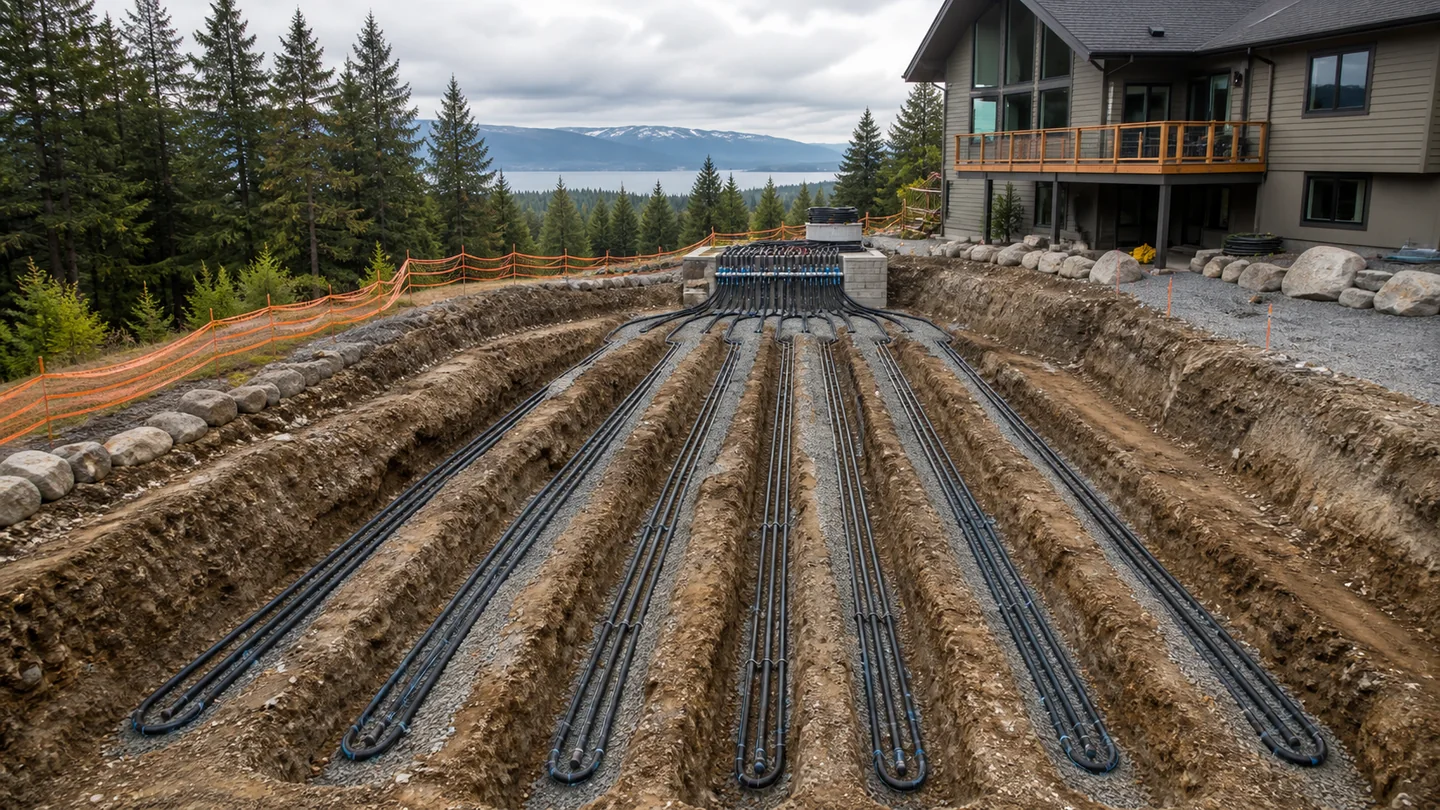
- Loop types. Horizontal Closed Loop is a geothermal loop or water-source configuration used to exchange heat with the earth or an approved water source. The best option depends on available land, drilling conditions, water availability, permitting, access, and professional loop design.
- Horizontal Ground Heat Exchanger
- Loop types. Horizontal Ground Heat Exchanger is a geothermal loop or water-source configuration used to exchange heat with the earth or an approved water source. The best option depends on available land, drilling conditions, water availability, permitting, access, and professional loop design.
- Humidity Control
- Indoor comfort and distribution. Humidity Control describes the indoor side of comfort delivery: airflow, ducts, hydronics, zoning, humidity control, or room distribution. Geothermal equipment can only perform well when the indoor distribution system can deliver the required heating and cooling quietly and evenly.
- Hydronic Buffer Tank
- Indoor comfort and distribution. Hydronic Buffer Tank describes the indoor side of comfort delivery: airflow, ducts, hydronics, zoning, humidity control, or room distribution. Geothermal equipment can only perform well when the indoor distribution system can deliver the required heating and cooling quietly and evenly.
- Infiltration
- Design and sizing. Infiltration is a design value used to match the geothermal equipment, ground loop, pumping, controls, and indoor distribution to the actual house. Homeowners should ask where the value came from and whether it is documented in the proposal.
- Injection Well
- Open-loop and water-well terms. Injection Well is an open-loop or water-well concept connected to how groundwater is supplied, returned, treated, measured, or discharged. Because water availability, water quality, and permits are site-specific, homeowners should involve qualified well and HVAC professionals.
- Iron Fouling
- Open-loop and water-well terms. Iron Fouling is an open-loop or water-well concept connected to how groundwater is supplied, returned, treated, measured, or discharged. Because water availability, water quality, and permits are site-specific, homeowners should involve qualified well and HVAC professionals.
- Karst
- Soil, geology, and site conditions. Karst is a site condition that can influence trenching, drilling, loop sizing, water management, restoration, or permitting. It does not automatically prevent geothermal installation, but it should be evaluated before the design and price are finalized.
- Latent Capacity
- Indoor comfort and distribution. Latent Capacity describes the indoor side of comfort delivery: airflow, ducts, hydronics, zoning, humidity control, or room distribution. Geothermal equipment can only perform well when the indoor distribution system can deliver the required heating and cooling quietly and evenly.
- Latent Load
- Design and sizing. Latent Load describes part of the heating or cooling demand the geothermal system must satisfy. Accurate load information helps prevent comfort complaints, short cycling, unnecessary backup heat, and poor humidity control.
- Leak Testing
- Installation and commissioning. Leak Testing is an installation or startup step used to prove the geothermal system was built, cleaned, filled, tested, or documented correctly. It should appear in the scope of work or closeout package when it affects future service.
- Leaving Water Temperature
- Design and sizing. Leaving Water Temperature is a loop-water temperature reading taken at the heat pump during operation. Installers use it to verify that the loop field, pumping, and heat pump are operating within expected ranges.
- Licensed Well Driller
- Standards, certifications, and contractors. Licensed Well Driller identifies a professional role, certification, standard, or rating organization that may appear in geothermal proposals. It helps homeowners understand who is qualified for design, drilling, HVAC installation, electrical work, commissioning, or equipment verification.
- Limestone
- Soil, geology, and site conditions. Limestone is a site condition that can influence trenching, drilling, loop sizing, water management, restoration, or permitting. It does not automatically prevent geothermal installation, but it should be evaluated before the design and price are finalized.
- Loam
- Soil, geology, and site conditions. Loam is a site condition that can influence trenching, drilling, loop sizing, water management, restoration, or permitting. It does not automatically prevent geothermal installation, but it should be evaluated before the design and price are finalized.
- Loop Sizing
- Design and sizing. Loop Sizing is a design value used to match the geothermal equipment, ground loop, pumping, controls, and indoor distribution to the actual house. Homeowners should ask where the value came from and whether it is documented in the proposal.
- Low Water Table
- Soil, geology, and site conditions. Low Water Table is a site condition that can influence trenching, drilling, loop sizing, water management, restoration, or permitting. It does not automatically prevent geothermal installation, but it should be evaluated before the design and price are finalized.
- Low-Temperature Hydronic Heating
- Indoor comfort and distribution. Low-Temperature Hydronic Heating describes the indoor side of comfort delivery: airflow, ducts, hydronics, zoning, humidity control, or room distribution. Geothermal equipment can only perform well when the indoor distribution system can deliver the required heating and cooling quietly and evenly.
- Manual D Duct Design
- Design and sizing. Manual D duct design is the residential duct-design method used to size ducts and registers for the airflow the equipment needs. It matters because geothermal comfort can fail if old ductwork cannot move enough air quietly and efficiently.
- Manual J Certification
- Standards, certifications, and contractors. Manual J Certification identifies a professional role, certification, standard, or rating organization that may appear in geothermal proposals. It helps homeowners understand who is qualified for design, drilling, HVAC installation, electrical work, commissioning, or equipment verification.
- Manual J Load Calculation
- Design and sizing. A Manual J load calculation estimates how much heating and cooling a specific house needs room by room. It is the starting point for selecting geothermal equipment, checking ductwork, and avoiding oversized or undersized systems.
- Manual S Equipment Selection
- Design and sizing. Manual S equipment selection is the process of matching HVAC equipment capacity to the load calculation. For geothermal, it helps connect the Manual J results to the proposed heat pump size, staging, and backup heat strategy.
- Methanol
- Installation and commissioning. Methanol relates to freeze protection for closed-loop geothermal fluid. The installer should document the product, concentration, freeze-protection target, safety handling, and final test reading.
- Packaged Geothermal Heat Pump
- System parts. Packaged Geothermal Heat Pump is supplemental heat used when the geothermal heat pump cannot meet the thermostat demand by itself or when controls call for backup operation. It should be clearly documented because excessive backup heat can raise operating costs.
- Part Load Operation
- Design and sizing. Part Load Operation describes part of the heating or cooling demand the geothermal system must satisfy. Accurate load information helps prevent comfort complaints, short cycling, unnecessary backup heat, and poor humidity control.
- Permafrost
- Soil, geology, and site conditions. Permafrost is a site condition that can influence trenching, drilling, loop sizing, water management, restoration, or permitting. It does not automatically prevent geothermal installation, but it should be evaluated before the design and price are finalized.
- Pond/Lake Closed Loop
- Loop types. Pond/Lake Closed Loop is a geothermal loop or water-source configuration used to exchange heat with the earth or an approved water source. The best option depends on available land, drilling conditions, water availability, permitting, access, and professional loop design.
- Pressure Drop
- Design and sizing. Pressure Drop describes how much loop fluid moves through the geothermal system and how much resistance the pump must overcome. It affects heat transfer, pump energy, equipment protection, and startup verification.
- Pressure Testing
- Installation and commissioning. Pressure Testing is an installation or startup step used to prove the geothermal system was built, cleaned, filled, tested, or documented correctly. It should appear in the scope of work or closeout package when it affects future service.
- Propylene Glycol
- Installation and commissioning. Propylene Glycol relates to freeze protection for closed-loop geothermal fluid. The installer should document the product, concentration, freeze-protection target, safety handling, and final test reading.
- Pump And Dump
- Open-loop and water-well terms. Pump And Dump is an open-loop or water-well concept connected to how groundwater is supplied, returned, treated, measured, or discharged. Because water availability, water quality, and permits are site-specific, homeowners should involve qualified well and HVAC professionals.
- Pump Module
- System parts. Pump Module is part of the pumping package that moves loop fluid between the heat pump and the ground loop or water-side piping. It matters because poor pumping design can waste electricity, reduce heat transfer, and cause flow alarms.
- Pumping Power
- Design and sizing. Pumping Power describes how much loop fluid moves through the geothermal system and how much resistance the pump must overcome. It affects heat transfer, pump energy, equipment protection, and startup verification.
- Purging
- Installation and commissioning. Purging is an installation or startup step used to prove the geothermal system was built, cleaned, filled, tested, or documented correctly. It should appear in the scope of work or closeout package when it affects future service.
- Radiant Slab
- Indoor comfort and distribution. Radiant Slab describes the indoor side of comfort delivery: airflow, ducts, hydronics, zoning, humidity control, or room distribution. Geothermal equipment can only perform well when the indoor distribution system can deliver the required heating and cooling quietly and evenly.
- Reinjection
- Open-loop and water-well terms. Reinjection is an open-loop or water-well concept connected to how groundwater is supplied, returned, treated, measured, or discharged. Because water availability, water quality, and permits are site-specific, homeowners should involve qualified well and HVAC professionals.
- Residential Clean Energy Credit
- Incentives and policy terms. Residential Clean Energy Credit describes an incentive, credit, rebate, or eligibility concept that may affect geothermal project paperwork. Homeowners should verify current rules with official sources and qualified tax or rebate professionals before relying on any estimate.
- Restoration
- Installation and commissioning. Restoration is an installation or startup step used to prove the geothermal system was built, cleaned, filled, tested, or documented correctly. It should appear in the scope of work or closeout package when it affects future service.
- Return Well
- Open-loop and water-well terms. Return Well is an open-loop or water-well concept connected to how groundwater is supplied, returned, treated, measured, or discharged. Because water availability, water quality, and permits are site-specific, homeowners should involve qualified well and HVAC professionals.
- Room By Room Load Calculation
- Design and sizing. Room By Room Load Calculation describes part of the heating or cooling demand the geothermal system must satisfy. Accurate load information helps prevent comfort complaints, short cycling, unnecessary backup heat, and poor humidity control.
- Sandstone
- Soil, geology, and site conditions. Sandstone is a site condition that can influence trenching, drilling, loop sizing, water management, restoration, or permitting. It does not automatically prevent geothermal installation, but it should be evaluated before the design and price are finalized.
- Sandy Soil
- Soil, geology, and site conditions. Sandy Soil is a site condition that can influence trenching, drilling, loop sizing, water management, restoration, or permitting. It does not automatically prevent geothermal installation, but it should be evaluated before the design and price are finalized.
- Scaling
- Open-loop and water-well terms. Scaling is an open-loop or water-well concept connected to how groundwater is supplied, returned, treated, measured, or discharged. Because water availability, water quality, and permits are site-specific, homeowners should involve qualified well and HVAC professionals.
- Sediment
- Open-loop and water-well terms. Sediment is an open-loop or water-well concept connected to how groundwater is supplied, returned, treated, measured, or discharged. Because water availability, water quality, and permits are site-specific, homeowners should involve qualified well and HVAC professionals.
- Sensible Capacity
- Indoor comfort and distribution. Sensible Capacity describes the indoor side of comfort delivery: airflow, ducts, hydronics, zoning, humidity control, or room distribution. Geothermal equipment can only perform well when the indoor distribution system can deliver the required heating and cooling quietly and evenly.
- Sensible Load
- Design and sizing. Sensible Load describes part of the heating or cooling demand the geothermal system must satisfy. Accurate load information helps prevent comfort complaints, short cycling, unnecessary backup heat, and poor humidity control.
- Shale
- Soil, geology, and site conditions. Shale is a site condition that can influence trenching, drilling, loop sizing, water management, restoration, or permitting. It does not automatically prevent geothermal installation, but it should be evaluated before the design and price are finalized.
- Shallow Bedrock
- Soil, geology, and site conditions. Shallow Bedrock is a site condition that can influence trenching, drilling, loop sizing, water management, restoration, or permitting. It does not automatically prevent geothermal installation, but it should be evaluated before the design and price are finalized.
- Slinky Loop
- Loop types. Slinky Loop is a geothermal loop or water-source configuration used to exchange heat with the earth or an approved water source. The best option depends on available land, drilling conditions, water availability, permitting, access, and professional loop design.
- Slope
- Soil, geology, and site conditions. Slope is a site condition that can influence trenching, drilling, loop sizing, water management, restoration, or permitting. It does not automatically prevent geothermal installation, but it should be evaluated before the design and price are finalized.
- Soil Moisture
- Soil, geology, and site conditions. Soil Moisture is a site condition that can influence trenching, drilling, loop sizing, water management, restoration, or permitting. It does not automatically prevent geothermal installation, but it should be evaluated before the design and price are finalized.
- Soil Thermal Properties
- Soil, geology, and site conditions. Soil Thermal Properties is a site condition that can influence trenching, drilling, loop sizing, water management, restoration, or permitting. It does not automatically prevent geothermal installation, but it should be evaluated before the design and price are finalized.
- Split Geothermal Heat Pump
- System parts. Split Geothermal Heat Pump is supplemental heat used when the geothermal heat pump cannot meet the thermostat demand by itself or when controls call for backup operation. It should be clearly documented because excessive backup heat can raise operating costs.
- Standing Column Bleed
- Open-loop and water-well terms. Standing Column Bleed is an open-loop or water-well concept connected to how groundwater is supplied, returned, treated, measured, or discharged. Because water availability, water quality, and permits are site-specific, homeowners should involve qualified well and HVAC professionals.
- Startup Checklist
- Installation and commissioning. Startup Checklist is an installation or startup step used to prove the geothermal system was built, cleaned, filled, tested, or documented correctly. It should appear in the scope of work or closeout package when it affects future service.
- State Geothermal Rebate
- Incentives and policy terms. State Geothermal Rebate describes an incentive, credit, rebate, or eligibility concept that may affect geothermal project paperwork. Homeowners should verify current rules with official sources and qualified tax or rebate professionals before relying on any estimate.
- Static Pressure
- Indoor comfort and distribution. Static Pressure describes the indoor side of comfort delivery: airflow, ducts, hydronics, zoning, humidity control, or room distribution. Geothermal equipment can only perform well when the indoor distribution system can deliver the required heating and cooling quietly and evenly.
- Straight Pipe Horizontal Loop
- Loop types. Straight Pipe Horizontal Loop is a geothermal loop or water-source configuration used to exchange heat with the earth or an approved water source. The best option depends on available land, drilling conditions, water availability, permitting, access, and professional loop design.
- Supply Well
- Open-loop and water-well terms. Supply Well is an open-loop or water-well concept connected to how groundwater is supplied, returned, treated, measured, or discharged. Because water availability, water quality, and permits are site-specific, homeowners should involve qualified well and HVAC professionals.
- Surface Discharge
- Open-loop and water-well terms. Surface Discharge is an open-loop or water-well concept connected to how groundwater is supplied, returned, treated, measured, or discharged. Because water availability, water quality, and permits are site-specific, homeowners should involve qualified well and HVAC professionals.
- System Flushing
- Installation and commissioning. System Flushing is an installation or startup step used to prove the geothermal system was built, cleaned, filled, tested, or documented correctly. It should appear in the scope of work or closeout package when it affects future service.
- Tax Credit Eligibility
- Incentives and policy terms. Tax Credit Eligibility describes an incentive, credit, rebate, or eligibility concept that may affect geothermal project paperwork. Homeowners should verify current rules with official sources and qualified tax or rebate professionals before relying on any estimate.
- Thermal Diffusivity
- Soil, geology, and site conditions. Thermal Diffusivity is a site condition that can influence trenching, drilling, loop sizing, water management, restoration, or permitting. It does not automatically prevent geothermal installation, but it should be evaluated before the design and price are finalized.
- Thermal Response Test
- Design and sizing. Thermal Response Test describes how soil, rock, grout, or the loop field responds to heat movement over time. It is important for larger or drilling-intensive systems because ground properties affect bore length, spacing, and long-term performance.
- Thermal Storage Tank
- System parts. Thermal Storage Tank is a water-storage component used in some geothermal or hydronic designs to stabilize flow, temperature, or run time. Homeowners should confirm tank purpose, size, insulation, piping, and controls rather than assuming every system needs one.
- Thermostat Staging
- System parts. Thermostat staging is the control sequence that decides when first stage, second stage, auxiliary heat, or emergency heat should operate. Incorrect staging can make an efficient geothermal system run backup heat too often.
- Tonnage
- Design and sizing. Tonnage is a design value used to match the geothermal equipment, ground loop, pumping, controls, and indoor distribution to the actual house. Homeowners should ask where the value came from and whether it is documented in the proposal.
- Trenching
- Installation and commissioning. Trenching is an installation or startup step used to prove the geothermal system was built, cleaned, filled, tested, or documented correctly. It should appear in the scope of work or closeout package when it affects future service.
- Utility Locate
- Installation and commissioning. Utility Locate is an installation or startup step used to prove the geothermal system was built, cleaned, filled, tested, or documented correctly. It should appear in the scope of work or closeout package when it affects future service.
- Variable Speed Compressor
- System parts. Variable Speed Compressor describes how the geothermal heat pump compressor changes output to match the home load. It affects comfort, run time, electrical demand, humidity control, and how often backup heat is needed.
- Vertical Closed Loop
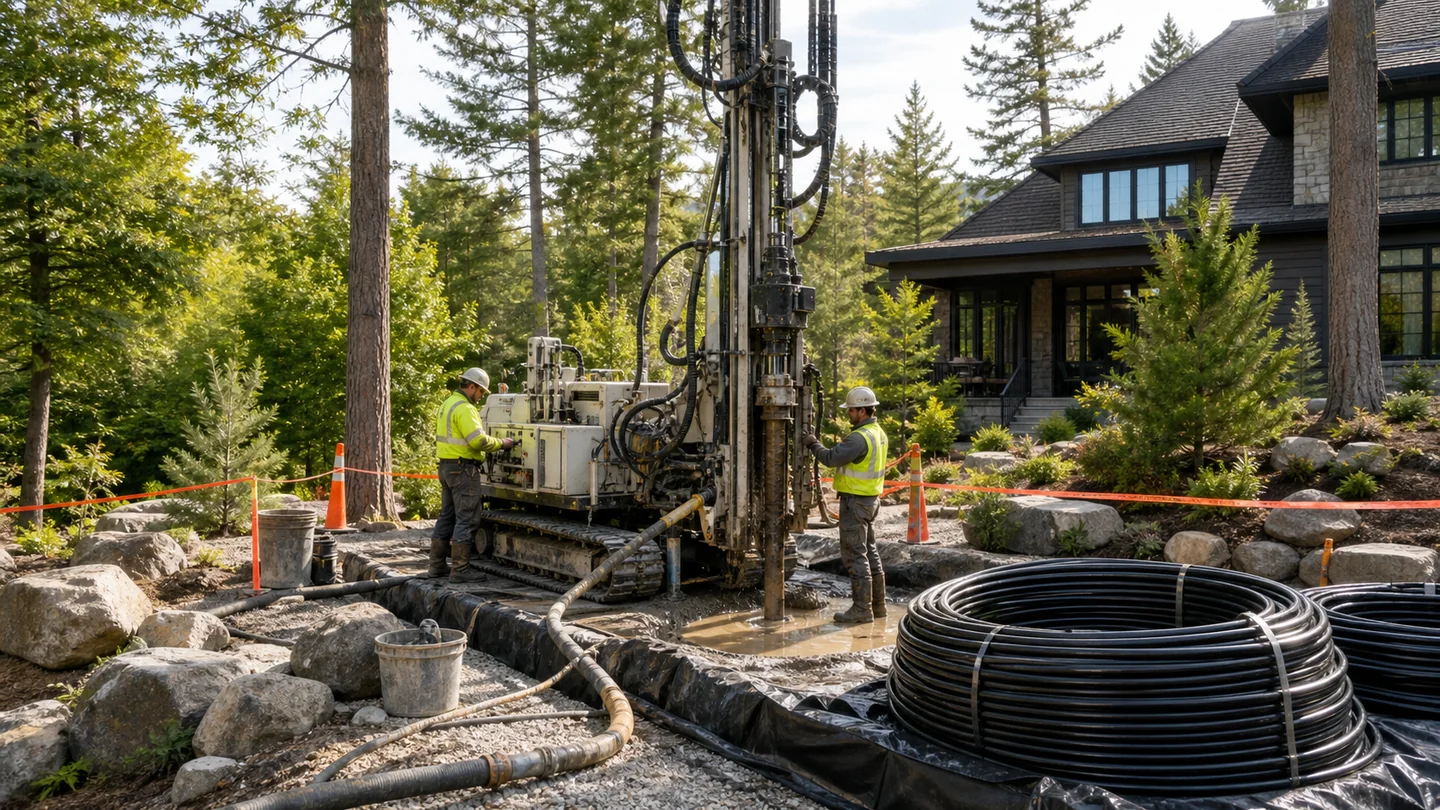
- Loop types. Vertical Closed Loop is a geothermal loop or water-source configuration used to exchange heat with the earth or an approved water source. The best option depends on available land, drilling conditions, water availability, permitting, access, and professional loop design.
- Vertical Ground Heat Exchanger
- Loop types. Vertical Ground Heat Exchanger is a geothermal loop or water-source configuration used to exchange heat with the earth or an approved water source. The best option depends on available land, drilling conditions, water availability, permitting, access, and professional loop design.
- Water Quality Test
- Installation and commissioning. Water Quality Test is an installation or startup step used to prove the geothermal system was built, cleaned, filled, tested, or documented correctly. It should appear in the scope of work or closeout package when it affects future service.
- Water-to-Air Geothermal Heat Pump
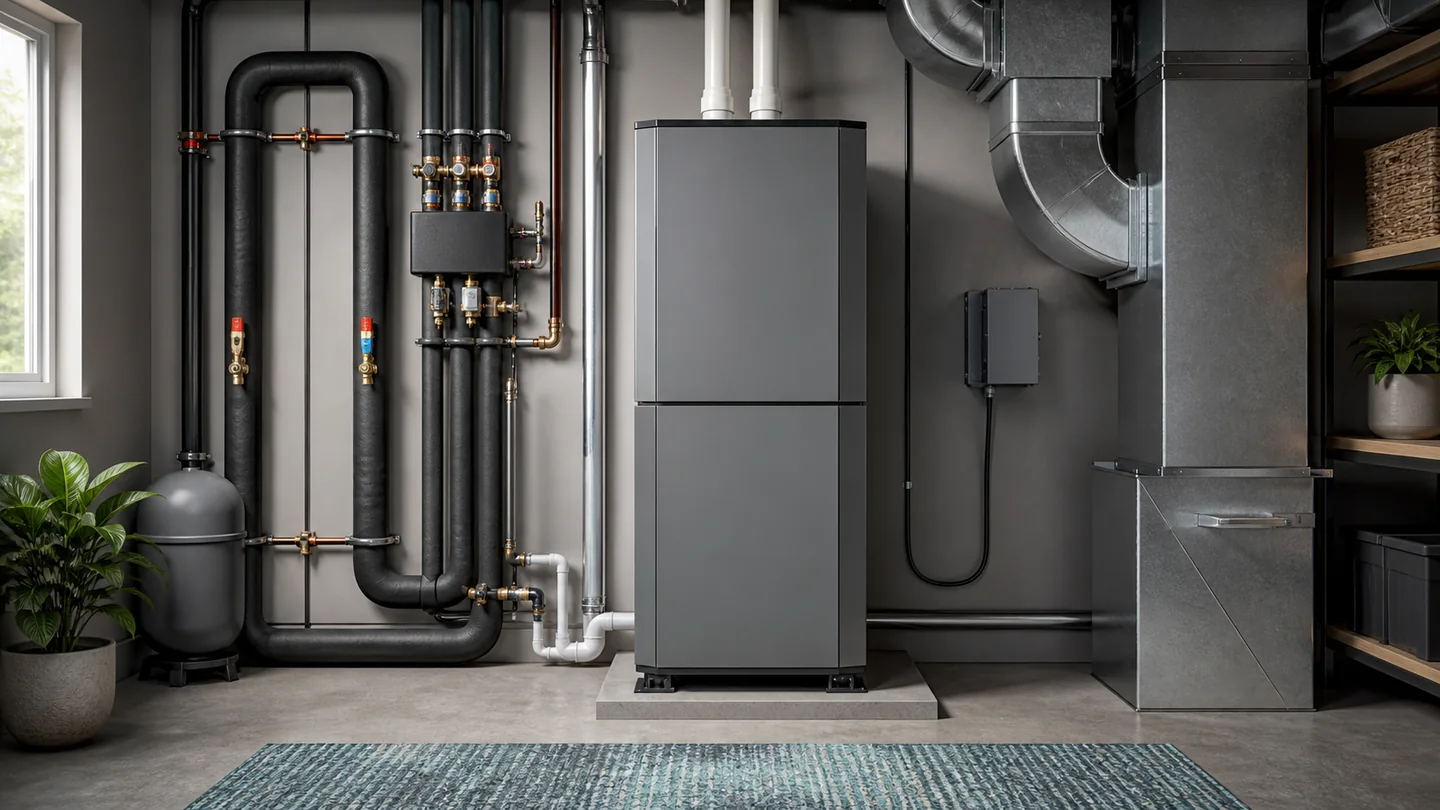
- System parts. Water-to-Air Geothermal Heat Pump is supplemental heat used when the geothermal heat pump cannot meet the thermostat demand by itself or when controls call for backup operation. It should be clearly documented because excessive backup heat can raise operating costs.
- Water-to-Water Geothermal Heat Pump
- System parts. Water-to-Water Geothermal Heat Pump is supplemental heat used when the geothermal heat pump cannot meet the thermostat demand by itself or when controls call for backup operation. It should be clearly documented because excessive backup heat can raise operating costs.
- Well Permit
- Installation and commissioning. Well Permit is a regulatory approval or discharge requirement that may apply to wells, water handling, drilling, or site work. Homeowners should confirm who obtains it and what inspections or documentation are required before work starts.
- Well Pump
- Open-loop and water-well terms. Well Pump is an open-loop or water-well concept connected to how groundwater is supplied, returned, treated, measured, or discharged. Because water availability, water quality, and permits are site-specific, homeowners should involve qualified well and HVAC professionals.
- Well Yield
- Open-loop and water-well terms. Well Yield is an open-loop or water-well concept connected to how groundwater is supplied, returned, treated, measured, or discharged. Because water availability, water quality, and permits are site-specific, homeowners should involve qualified well and HVAC professionals.
- Zone Control
- System parts. Zone control uses dampers, thermostats, controls, or hydronic valves to serve different areas of the home separately. In geothermal systems, zoning must be designed carefully so airflow or water flow does not fall below equipment requirements.
- Zoning
- Indoor comfort and distribution. Zoning describes the indoor side of comfort delivery: airflow, ducts, hydronics, zoning, humidity control, or room distribution. Geothermal equipment can only perform well when the indoor distribution system can deliver the required heating and cooling quietly and evenly.