BALANCED HOMEOWNER GUIDE
Geothermal Pros and Cons
Geothermal can provide efficient, quiet, steady heating and cooling, but underground work, first cost, site constraints, and local service capacity make it a project-specific decision.

Where geothermal can be strong
- Efficiency and operating stability: the ground-side circuit usually sees less extreme conditions than an outdoor air coil, which can support efficient heating and cooling when the entire system is designed and commissioned well.
- Comfort: variable or staged equipment can provide long, steady cycles, even temperatures, and humidity control when loads, airflow, ducts, controls, and loop performance are coordinated.
- Quiet exterior: a typical closed-loop system has no outdoor compressor fan. Indoor blower, compressor, pumps, ducts, and water flow still make sound and should be installed and isolated correctly.
- Aesthetics and exposure: eliminating an outdoor condensing unit can free space and avoid an exterior component exposed to weather, vegetation, or impact.
- Long-lived infrastructure: a properly designed and installed ground loop may serve later heat-pump replacements. Its value depends on records, integrity, capacity, fluid, flow, pumping, and compatibility—not a blanket lifespan promise.
- All-electric heating and cooling: geothermal can avoid onsite combustion for primary space conditioning. The environmental result still depends on electricity supply, refrigerant management, pumping, materials, excavation, and the displaced system.
Tradeoffs and project risks
- Upfront cost: drilling or excavation, loop materials, pumps, design, permits, electrical work, ducts, and restoration can make first installation substantially more involved than replacing conventional equipment.
- Site disruption: trenches, boreholes, equipment access, spoils, wet ground, rock, utilities, wells, septic systems, pavement, landscaping, and settlement require planning and written responsibility.
- Retrofit complexity: existing ducts, hydronic distribution, mechanical space, electrical service, envelope problems, and occupied finishes may need work beyond the heat pump.
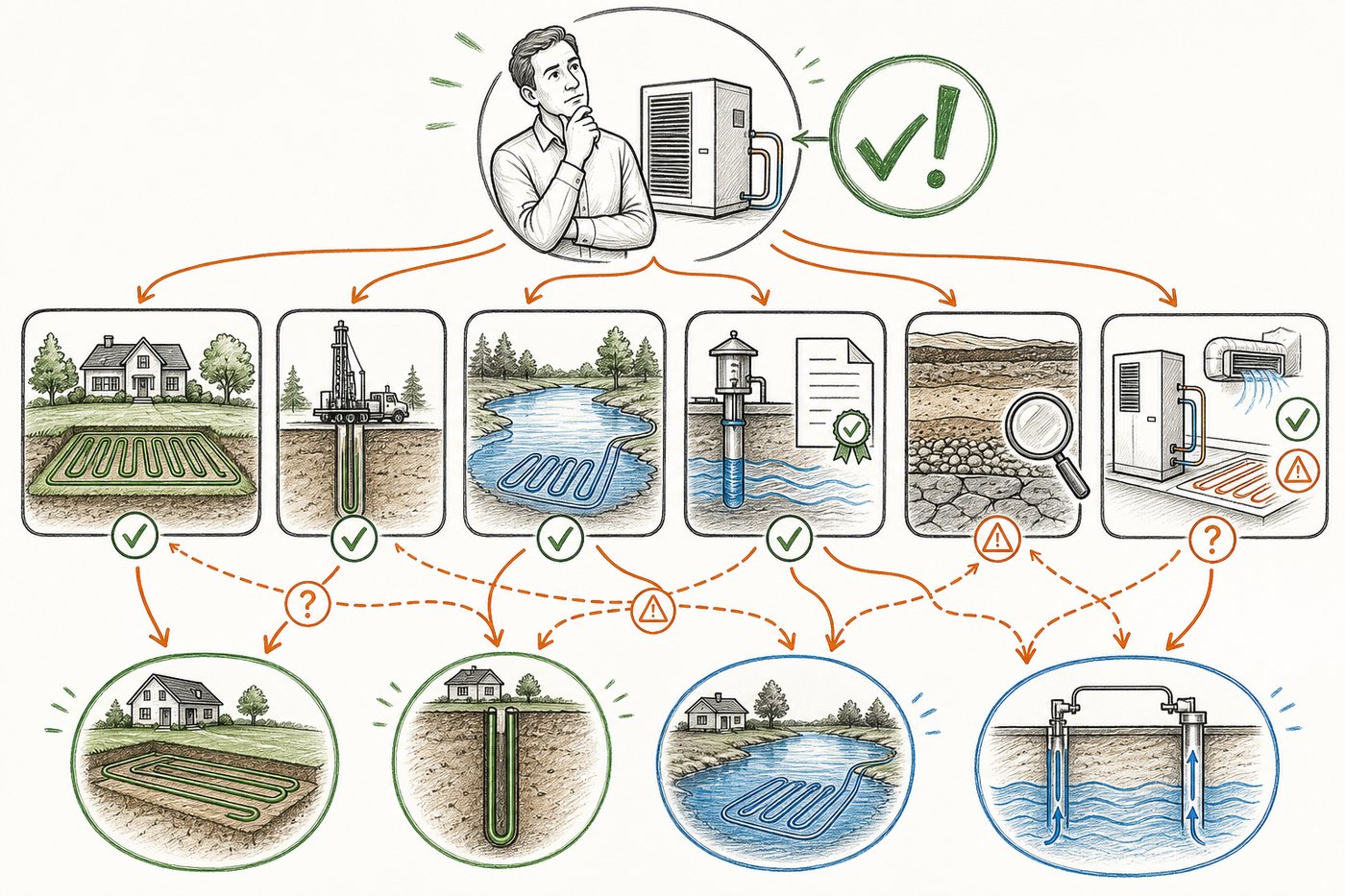
- Property constraints: limited access, protected areas, difficult geology, unsuitable groundwater, small lots, easements, slopes, mature landscaping, or local rules can eliminate or reshape loop choices.
- Specialized service: a technician may need competence in refrigeration, airflow, controls, pumping, loop temperatures and flow, antifreeze, and fault interpretation. Local diagnostic support matters before and after purchase.
- Repair concentration: although the exterior fan is absent, compressors, controls, pumps, blowers, valves, refrigerant components, auxiliary heat, and distribution can fail. Underground loops are durable but leaks or flow problems require qualified diagnosis.
Longevity and maintenance in context
Indoor geothermal equipment does not have the same outdoor weather exposure as a conventional condensing unit, but actual life depends on sizing, runtime, water and airflow, installation, electrical conditions, maintenance, environment, and repair decisions. Ask for warranty terms and local parts and service support rather than relying on a universal age claim.
Homeowner maintenance commonly includes following manufacturer filter guidance, keeping registers and returns clear, observing condensate drainage, using normal thermostat settings, and recording fault codes or changes in noise and energy use. Professional service may include airflow, electrical, refrigeration, controls, pumps, loop flow or pressure, fluid, auxiliary heat, and condensate checks. Open-loop systems add water-quality and well or discharge considerations.
Climate, backup heat, and electrical considerations
Geothermal can operate in cold, mixed, and hot climates, but local heating, cooling, and humidity loads still drive design. In a heating-dominant climate, loop and backup strategy need attention; in a cooling-dominant or humid climate, heat rejection, airflow, staging, and moisture control matter. Climate does not rescue poor sizing or commissioning.
Electric resistance backup can support unusual loads or faults, but it increases electrical demand and can raise energy use when overused. The proposal should explain capacity, controls, expected operation, panel and service requirements, and how frequent auxiliary heat will be diagnosed. Other backup arrangements need equally clear operating and maintenance plans.
When geothermal often deserves serious evaluation
- The home needs major HVAC work and the owner plans to stay long enough to value durable infrastructure rather than first cost alone.
- The site has a feasible, permitted loop option and drilling or excavation access can be managed responsibly.
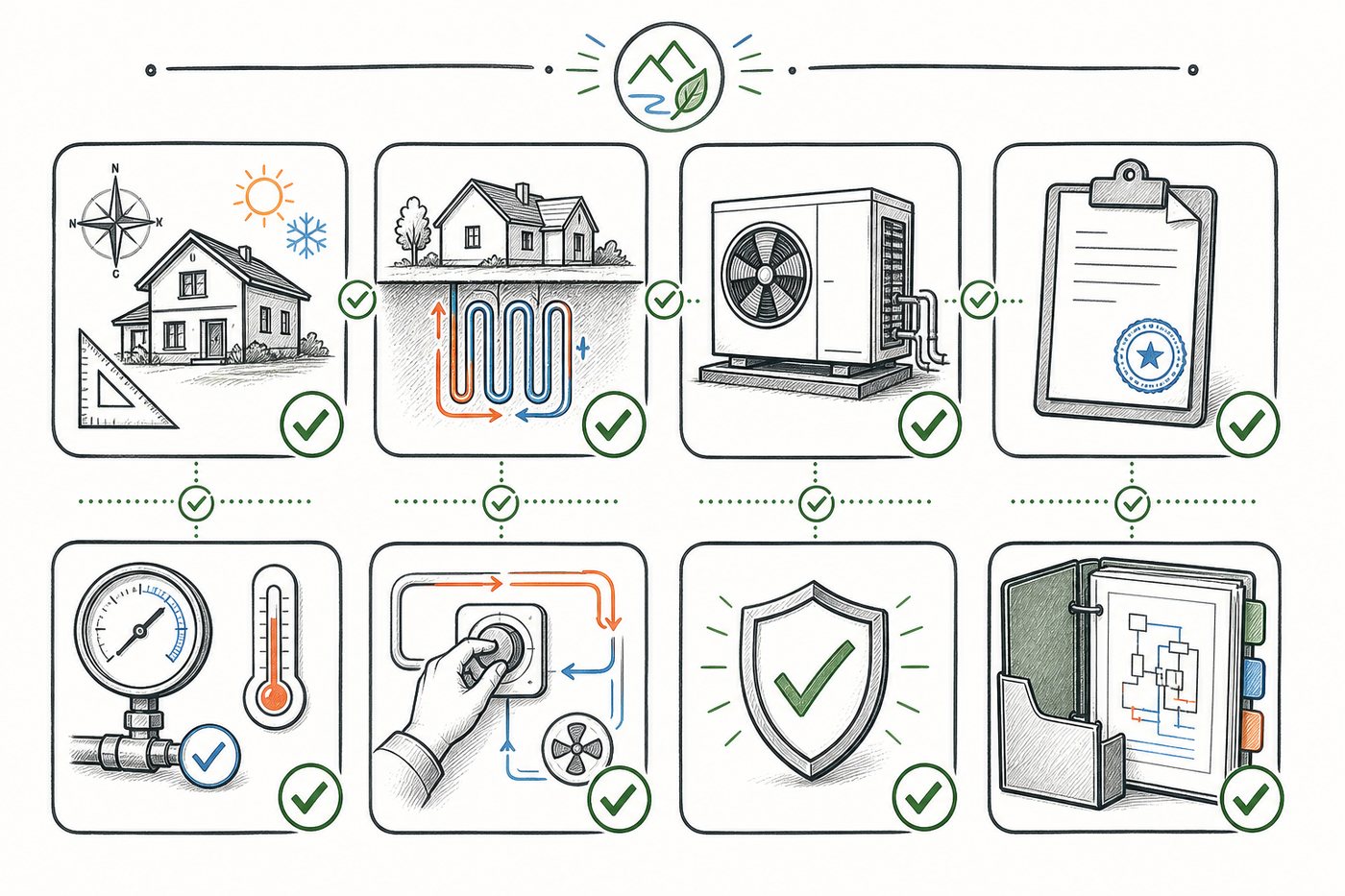
- A qualified team can document loads, loop design, distribution, electrical work, commissioning, warranties, and long-term service.
- The project can coordinate envelope or duct improvements instead of using equipment to mask unresolved building problems.
- The homeowner values quiet exterior operation, steady comfort, and an all-electric option and has compared financing and operating assumptions realistically.
When another HVAC solution may be better
A modern air-source heat pump or another system may be more practical when ground work is technically difficult, access or permitting is poor, the site will be heavily disrupted, local geothermal service is unavailable, existing distribution is incompatible, the owner expects to move soon, or the budget would defer more valuable envelope, safety, or electrical work.
The right comparison is not geothermal versus an old failing system. Compare complete, code-compliant alternatives using the same loads, comfort goals, distribution repairs, electrical scope, backup assumptions, financing horizon, energy prices, maintenance, warranties, and contractor quality. Geothermal is a strong option in the right project, not an automatic answer for every home.