PROJECT PLANNING
Geothermal Heat Pump Cost Guide
A useful geothermal price is a complete project scope, not a national average. See which equipment, ground work, building upgrades, and contract details make quotes differ.

Why geothermal prices vary
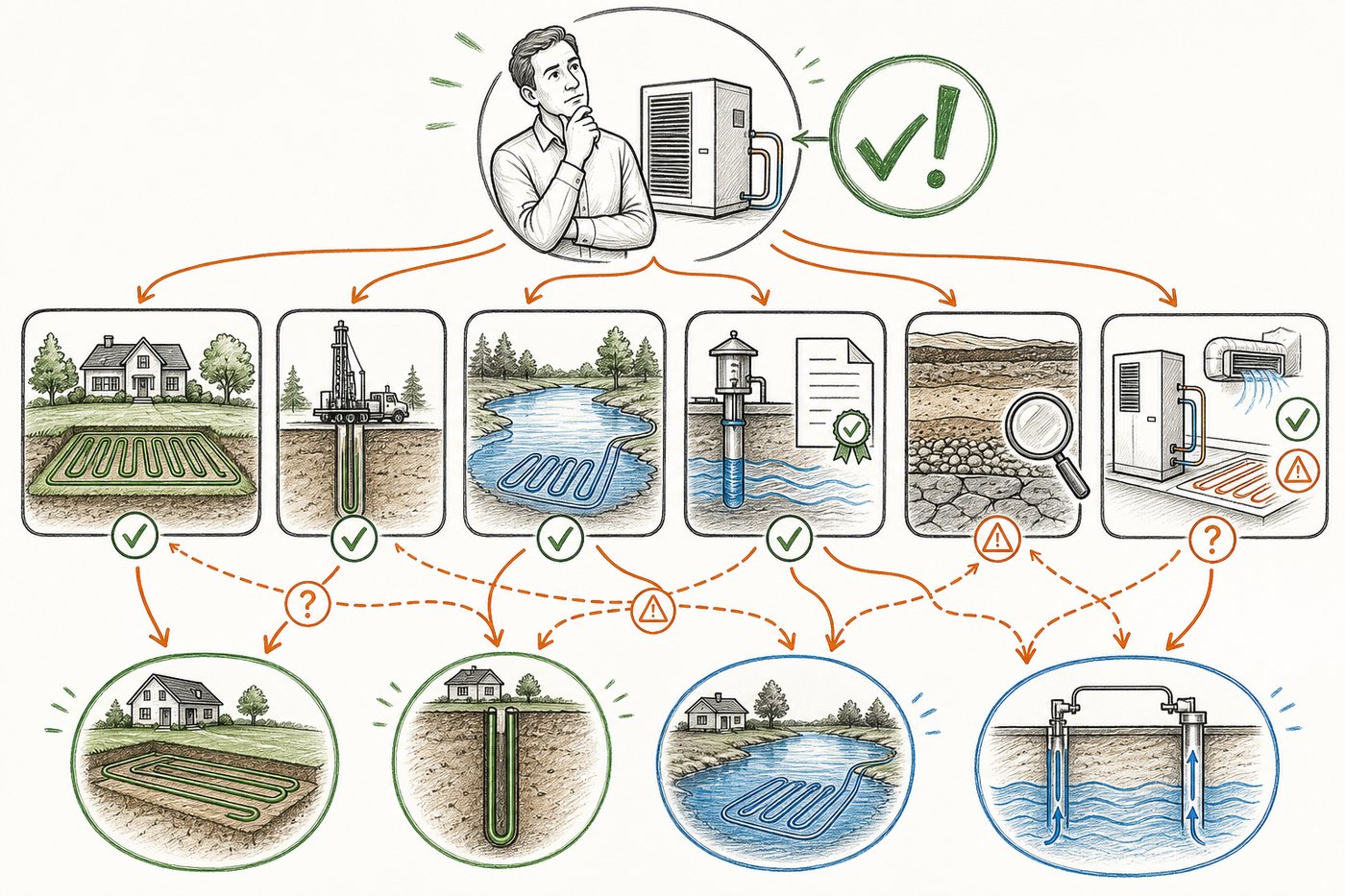
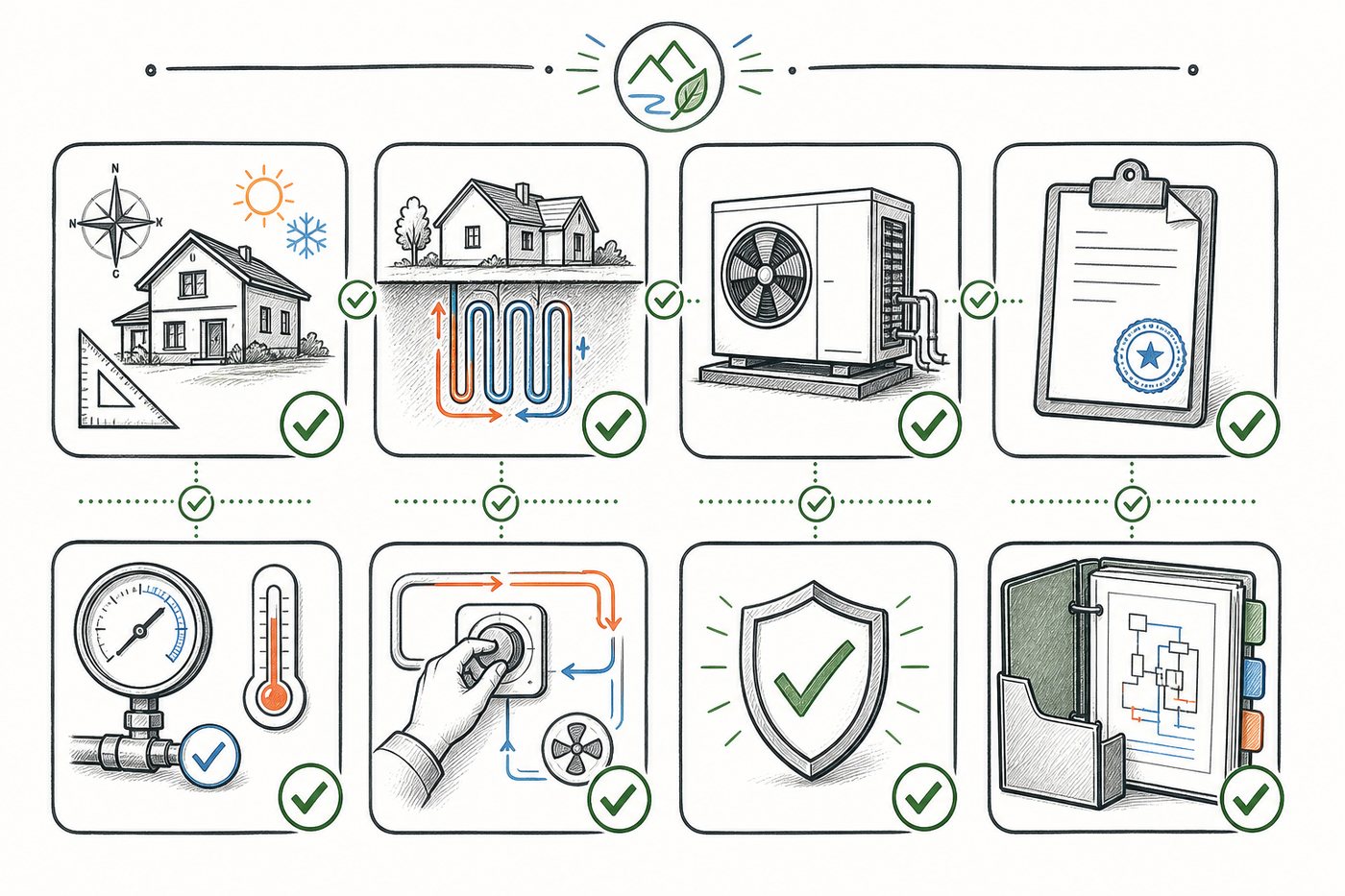
A geothermal project combines an HVAC installation with site-specific underground work. Two similar homes can receive very different proposals because their loads, loop options, drilling or trenching conditions, access, distribution systems, electrical service, permitting, and restoration needs differ. A precise national price promise would hide those variables rather than help a homeowner plan.
Ask each bidder to separate known scope from allowances and unknown conditions. A lower headline price may exclude drilling mobilization, rock, spoils, electrical work, permits, controls, duct repairs, landscaping, or commissioning that another quote includes.
What makes up an installation quote
- Load calculation and design: room-by-room heating and cooling loads, equipment selection, airflow or hydronic design, loop sizing assumptions, pumping, controls, and backup-heat strategy.
- Indoor equipment: heat-pump unit, pumps or flow center, air handler or hydronic components, thermostat and controls, accessories, pads, vibration isolation, drains, and removal of old equipment.
- Ground work: utility locating, mobilization, trenching or drilling, loop pipe and headers, fusion, bore grouting or trench backfill, pressure testing, flushing, filling, fluid, excavation safety, spoils, and route into the building.
- Building work: duct repair or replacement, zoning changes, mechanical-room modifications, condensate disposal, plumbing for water-heating options, penetrations, and fire or weather sealing.
- Electrical work: disconnects, circuits, pumps, controls, auxiliary heat, panel or service evaluation, permits, and coordination with an electrician or utility where required.
- Permits and closeout: mechanical, electrical, drilling, well, environmental, or local approvals; inspections; startup; measured commissioning; homeowner training; warranties; and final records.
- Site restoration: grading, settlement correction terms, soil or rock removal, topsoil, seed or sod, irrigation, paving, fencing, landscaping, and responsibility for concealed conditions.
Horizontal versus vertical implications
Horizontal loops can reduce drilling but require enough usable, accessible land and substantial trenching. Soil handling, wet ground, slopes, buried utilities, mature landscaping, drainage, compaction, and restoration can dominate the site scope. More acreage does not automatically make trenching simple.
Vertical loops can reduce the surface footprint but add drilling mobilization and uncertainty related to geology, groundwater, bore depth and spacing, grouting, spoils, access, and local rules. Compare proposals using total designed loop capacity and documented assumptions, not only price per foot. An unexplained footage total is not a complete design.
New construction, retrofit, and replacement
New construction can coordinate loop access, grading, foundation penetrations, mechanical space, ducts, electrical service, and landscaping before finishes are installed. The load calculation still needs the final envelope and plans. A placeholder equipment size can become wrong as the design changes.
A first-time retrofit includes both the indoor conversion and new ground infrastructure. Existing ducts, returns, electrical capacity, comfort complaints, and envelope conditions need measurement. Occupied-site protection and restoration may add work that is absent on a clear construction site.
An equipment replacement may reuse a sound, correctly sized ground loop, but reuse should be verified. Ask for loop records, material and layout, pressure integrity, flow and pumping checks, fluid condition, prior faults, and compatibility with the proposed unit. A replacement quote should identify every reused pump, control, duct, electrical, and loop component and allocate warranty responsibility.
Operating cost and lifecycle thinking
Operating cost depends on the home's load, weather, thermostat settings, electricity rates, loop temperatures, pump and blower energy, duct losses, staging, maintenance, and auxiliary heat—not just the equipment rating. Ask for assumptions behind any estimate and compare it with actual bills and fuels rather than an undefined percentage-saving claim.
Lifecycle comparison should include financing, expected maintenance, access to qualified service, equipment replacement, pump and control work, and the long-lived ground infrastructure. Ground loops can remain useful across equipment replacements when designed, installed, documented, and maintained correctly, but no component should be given an unconditional lifespan promise.
How to compare quotes before accepting one
- Confirm that each bidder used a documented room-by-room load calculation and explain differences in loads and selected capacity.
- Normalize equipment model numbers, stages or variable capacity, efficiency ratings, pumps, controls, backup heat, hot-water options, ducts, electrical work, permits, removal, and restoration.
- Request a loop drawing and design basis: configuration, pipe, bore or trench arrangement, thermal assumptions, flow, pressure drop, pumping, testing, fluid, and changed-condition terms.
- Identify subcontractors and who is responsible for design, drilling, excavation, fusion, electrical work, permits, inspections, startup, and service.
- Ask what measured commissioning results you will receive, including airflow, temperatures, loop flow or pressure, pump operation, controls, auxiliary heat, and fault history as appropriate.
- Read equipment, labor, loop, drilling, pump, and controls warranties. Confirm exclusions, transfer terms, service response process, and which company stands behind each part.
- Do not accept incentive assumptions as guaranteed money. Verify current rules using official sources and obtain tax advice for your facts.