HOMEOWNER WARNING-SIGN GUIDE
Geothermal Red Flags
Warning signs in geothermal proposals, installations, troubleshooting, repair, and replacement—plus a factual way to ask for evidence without accusing individual businesses.

Contractor and proposal red flags
- No room-by-room load calculation, or sizing based only on square footage, the old unit, or a quick visual visit.
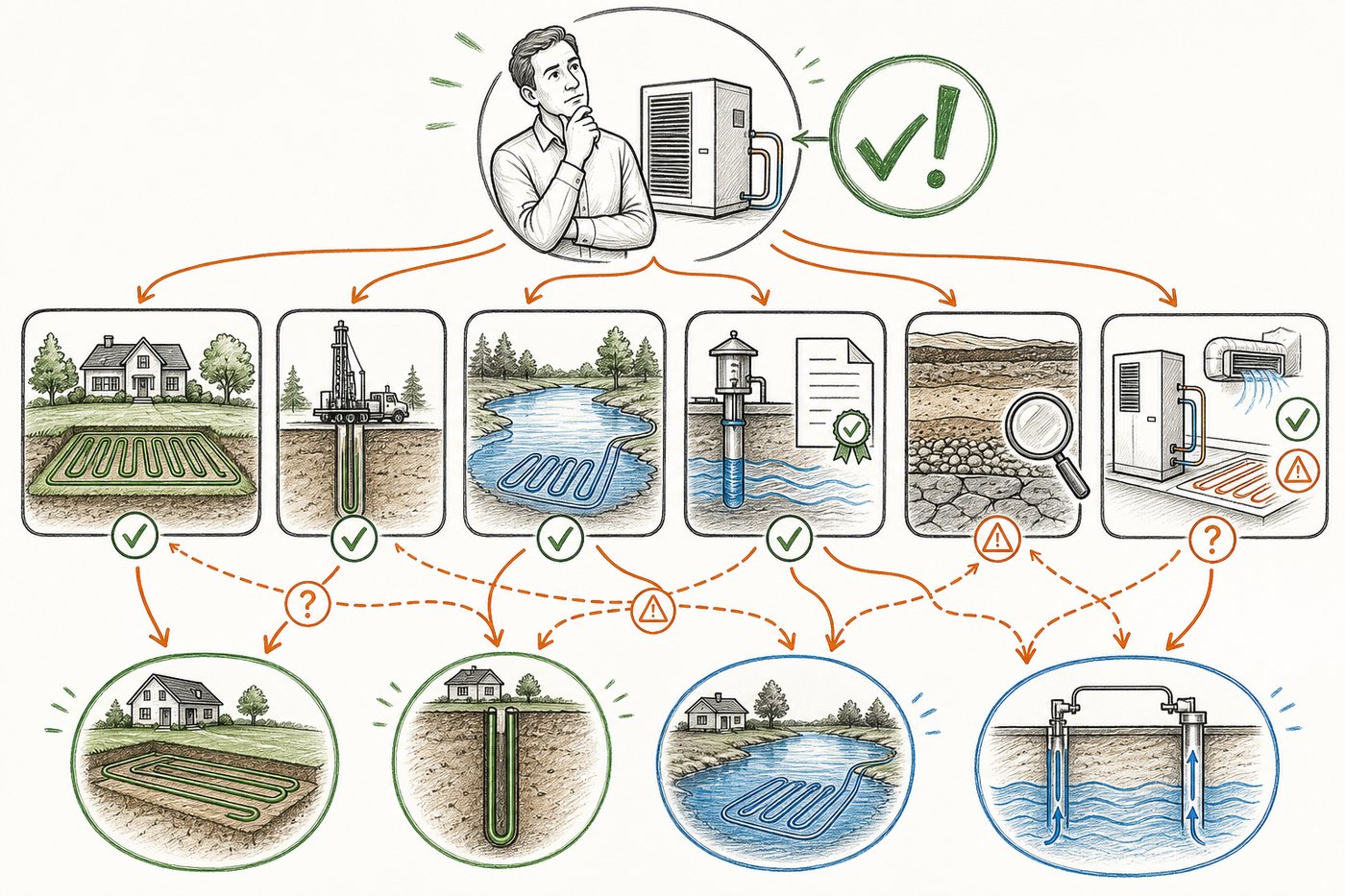
- Vague system sizing or an oversized or undersized recommendation without documented loads, stages, airflow, loop capacity, and backup strategy.
- An unexplained loop design: no configuration, layout, pipe, bore or trench quantity, thermal assumptions, flow, pumping, fluid, testing, or drawing.
- A quote without exact equipment model information, pumps, controls, auxiliary heat, efficiency basis, and included accessories.
- Unclear drilling or excavation responsibility, including mobilization, rock or water, spoils, grouting or backfill, pressure testing, utilities, and restoration.
- No permit and inspection discussion for HVAC, electrical, drilling, wells, water, environmental, building, or local requirements that may apply.
- Unclear equipment, labor, loop, drilling, pump, controls, and restoration warranties—or important promises made only verbally.
- Unrealistic savings, payback, equipment-life, or incentive promises that omit rates, loads, behavior, financing, maintenance, eligibility, and a calculation date.
- Pressure to sign immediately before receiving design reports, complete scope, exclusions, subcontractors, references, and written terms.
- No measured commissioning plan; startup is described only as turning the unit on.
- No repair or service-support plan, especially when the seller, driller, electrician, and controls contractor are separate businesses.
- Poor explanation of auxiliary or backup heat, including capacity, expected use, controls, electrical demand, and how excessive use will be diagnosed.
System and installation red flags
- Recurring breaker trips or a suggestion to keep resetting, bypass, or upsize a protective device without diagnosis.
- Repeated fault resets that erase symptoms without testing airflow, loop flow, pumps, sensors, controls, electrical supply, or the documented fault path.
- Unexplained high electric use, especially with frequent auxiliary heat, constant pump or blower operation, or a recent control change.
- Excessive auxiliary heat that is called normal without checking design weather, load, staging, loop performance, airflow, sensors, and equipment capacity.
- Repeated freeze or loop-flow faults, fluid additions, or pressure loss without finding the reason.
- Poor airflow, high static pressure, noisy ducts, restrictive returns, closed zones, or room imbalance left unresolved after equipment installation.
- New grinding, banging, arcing, severe vibration, water hammer, pump cavitation, or compressor noise dismissed without locating and measuring the source.
- Recurring condensate or water problems near electrical components, cabinets, drains, piping, or the mechanical room.
- Major temperature imbalance between rooms or floors explained only by telling the homeowner to change the thermostat.
- Repeated compressor, sensor, pressure, or control faults treated with parts replacement but no root-cause record.
- Unexplained loop pressure, flow, entering-water temperature, pumping, or fluid-condition problems.
- Inadequate electrical-service planning for compressors, pumps, blower, controls, and auxiliary heat.
- Repeated short cycling after installation without reviewing sizing, thermostat location, zones, airflow, controls, and fault history.
Replacement and repair red flags
- Recommending complete ground-loop replacement without pressure, integrity, layout, material, flow, pumping, fluid, and sizing diagnosis.
- Condemning the whole system without evaluating reusable loop infrastructure, ducts, pumps, controls, electrical work, and distribution separately.
- Repeated parts replacement without finding the root cause or documenting measurements before and after repair.
- Ignoring duct leakage, static pressure, return-air, balancing, or zoning problems while replacing indoor equipment.
- Ignoring thermostat, sensor, staging, communicating-control, or wiring issues that can mimic equipment failure.
- Skipping loop-flow verification where relevant to recurring water-side, freeze, pressure, capacity, or compressor faults.
- A replacement proposal that does not explain compatibility with the existing loop, pumps, fluid, controls, ducts, auxiliary heat, and electrical service.
- Reusing old components automatically because they reduce price, or replacing sound components automatically because they increase scope.
- Using age alone to demand replacement without discussing condition, parts, refrigerant, repair history, performance, and reasonable alternatives.
How to respond to a red flag
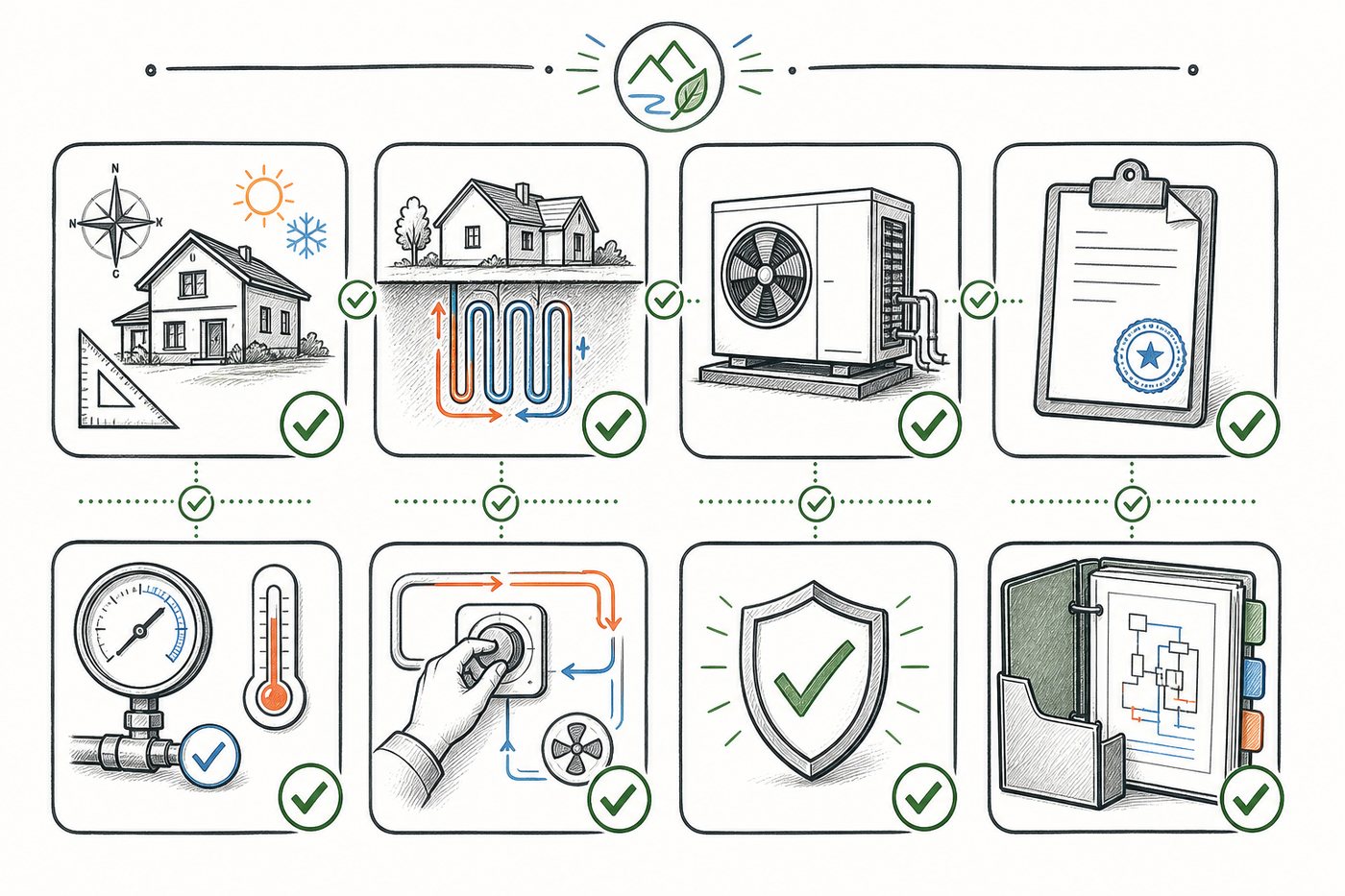
A red flag is a prompt for documentation and a second look, not proof that a business acted improperly. Ask for the load report, loop design, exact models, subcontractor roles, permits, measurements, commissioning plan, warranties, exclusions, and changed-condition terms. Give the contractor an opportunity to explain a legitimate technical difference.
For recurring faults, keep a dated log of thermostat settings, weather, fault codes, breaker trips, auxiliary-heat indication, noise, water, energy use, and service work. Request written measurements and the reason for each recommended repair. Seek a qualified second opinion when the proposed scope is major or the explanation does not connect symptoms to evidence.
Never respond to a safety red flag by opening live electrical panels, bypassing safeties, working on refrigerant, adding loop fluid, or excavating buried piping. Use normal controls if safe and call a qualified geothermal or HVAC professional or electrician.