CURRENT FEDERAL INFORMATION
Federal Geothermal Tax Credit Guide
A dated homeowner guide to the federal Residential Clean Energy Credit for geothermal heat pumps, including the current placed-in-service deadline, equipment concepts, records, and questions that require a tax professional.

Current federal status
Checked against IRS and ENERGY STAR information on August 11, 2026: the IRS states that the Residential Clean Energy Credit equals 30% of the cost of new, qualified clean-energy property installed from 2022 through December 31, 2025, and is not available for property placed in service after December 31, 2025. Therefore, a new geothermal system first placed in service in 2026 should not be marketed as qualifying under this expired federal provision.
This is a major change from older articles that described a longer phaseout. Homeowners evaluating prior-year work should use the rules and tax forms for the year the property was placed in service. Congress, the IRS, and agency guidance can change; verify the official IRS page before relying on this summary.
What qualified property meant
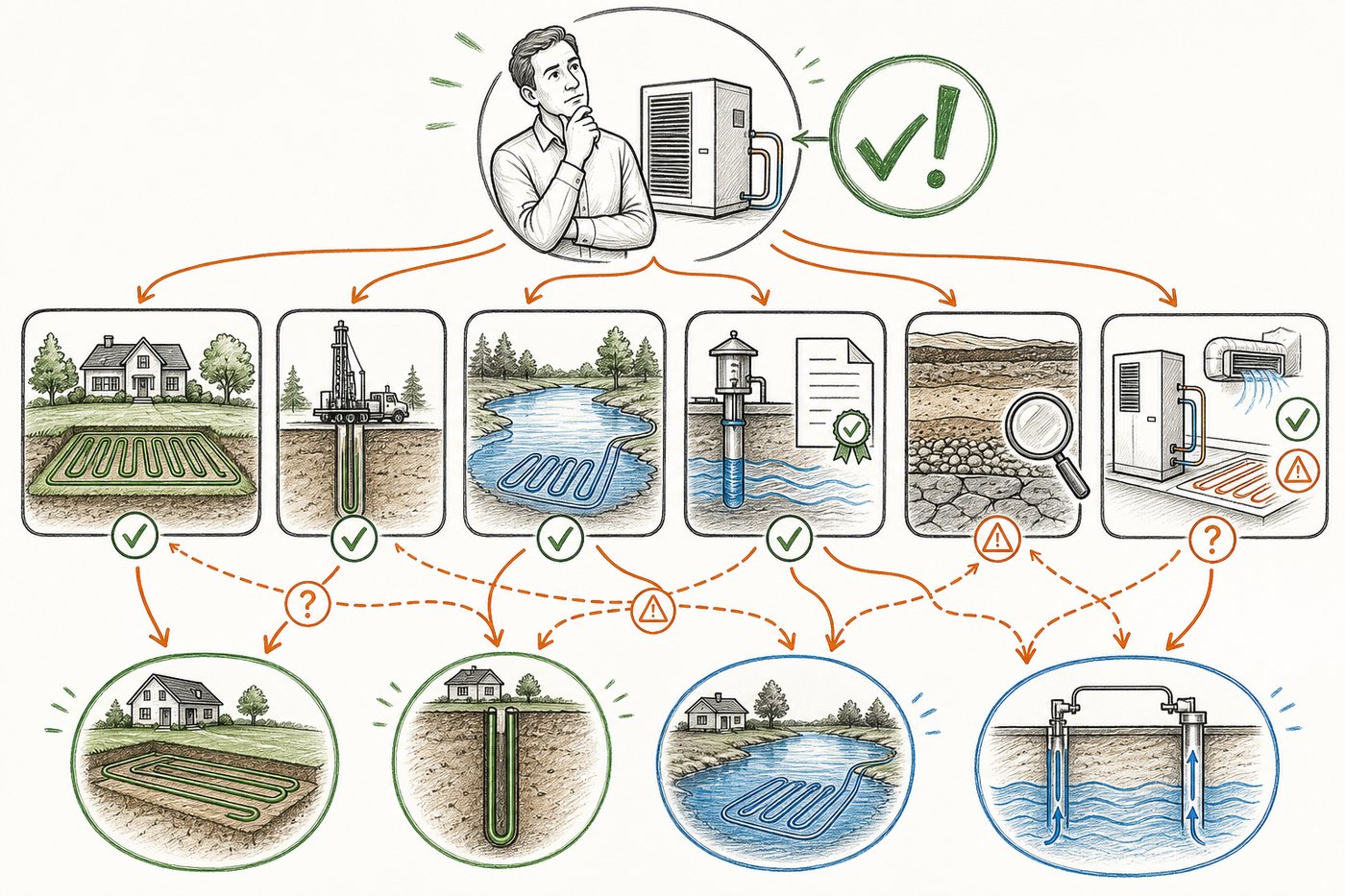
For eligible years, the IRS listed geothermal heat pumps among qualified clean-energy property and stated that geothermal equipment had to meet ENERGY STAR requirements in effect at the time of purchase. ENERGY STAR describes qualified geothermal equipment as using the ground or groundwater as a thermal energy source for heating or a thermal energy sink for cooling and being ENERGY STAR certified.
Eligibility applies to the taxpayer and residence as well as the equipment. IRS guidance discusses main homes, certain second homes, mixed business use, new versus used property, subsidies and rebates, and other limits. A product label or installer statement alone does not establish that a particular taxpayer, home, project, or cost qualifies.
Costs and placed-in-service timing
For eligible projects, IRS guidance says qualified expenses may include new clean-energy property and certain labor for onsite preparation, assembly, original installation, and piping or wiring that connects the property to the home. It also says the credit is claimed for the tax year the property is installed, not merely purchased. How a complex proposal allocates loop, drilling, duct, electrical, structural, financing, rebate, or mixed-use costs can require professional interpretation.
The IRS describes this credit as nonrefundable: it cannot reduce tax below zero. Its current page also discusses carrying forward an unused eligible credit. Carryforward availability, amended returns, basis effects, ownership, and interaction with subsidies or other incentives depend on the applicable year and taxpayer facts.
Documentation to keep
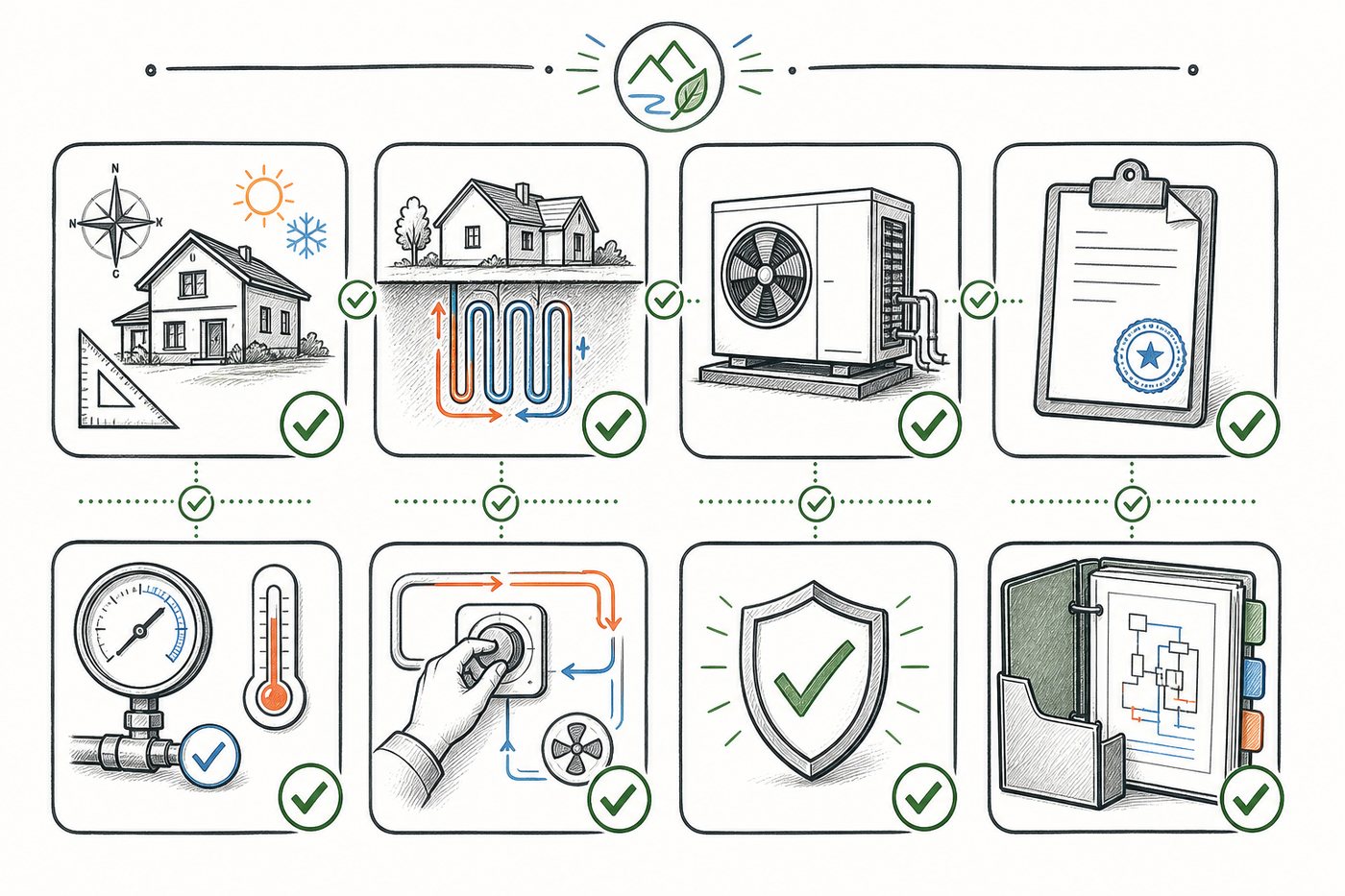
- Dated contract, invoices, proof of payment, and an itemized allocation of equipment, loop, labor, electrical, duct, permit, and other costs.
- Exact indoor-unit and associated equipment model numbers, serial numbers, manufacturer certification or ENERGY STAR eligibility evidence applicable at purchase, and product literature.
- Permit, inspection, startup, and commissioning records showing when the complete system was installed and placed in service.
- Loop drawings, drilling or trench records, and contractor statements that distinguish new qualified property from reused components.
- Records for rebates, subsidies, grants, utility incentives, insurance proceeds, business use, rental use, and any other amount that could affect qualified cost.
- The filed Form 5695, supporting worksheets, tax return, and any written advice from a credentialed tax professional.
Questions for an installer and tax professional
- Which exact models are proposed, and what official eligibility documentation applies to the purchase year?
- What date will the complete system be ready and placed in service, and which records will document that date?
- Which costs are separately itemized, and are any old components, unrelated improvements, financing charges, or allowances included?
- Will a rebate or subsidy reduce qualified cost or have another federal tax treatment?
- How do ownership, a second home, rental periods, business use, shared costs, or a prior-year carryforward affect this return?
- Is an amended return possible or appropriate for a qualifying prior-year installation?
Important boundary
This guide provides general educational information, not individualized tax advice. Installers are not automatically qualified to interpret federal tax law. Before signing a contract based on a credit, verify current IRS instructions and consult a qualified tax professional who can review the placed-in-service year, taxpayer, residence, equipment, costs, incentives, and documentation.
Official sources
Time-sensitive federal information above was checked against these official pages on August 11, 2026.