Alabama condition guide
Alabama Humid Climate Geothermal Installation Guide
A homeowner-focused guide to how Alabama’s humid climate, long cooling season, moisture control needs, ductwork, airflow, and commissioning details can affect geothermal heat pump planning.
Alabama geothermal projects are often judged by whether the home feels comfortable through long warm seasons, rainy periods, and humid shoulder-season weather. A ground-source heat pump can move heat efficiently, but homeowner comfort still depends on the full design: the load calculation, loop field, indoor equipment, ducts or other distribution, condensate handling, controls, and startup testing. This guide explains the humid-climate questions that should be asked before an Alabama homeowner signs a geothermal proposal.
This page uses the national geothermal installation guide as the structural model, but it is not a copied version of that guide. It focuses on the condition most likely to show up in everyday Alabama comfort conversations: heat plus moisture. For state-level installer research and local provider discovery, use the Alabama geothermal installers directory.
Quick-scan summary for Alabama homeowners
Guide navigation
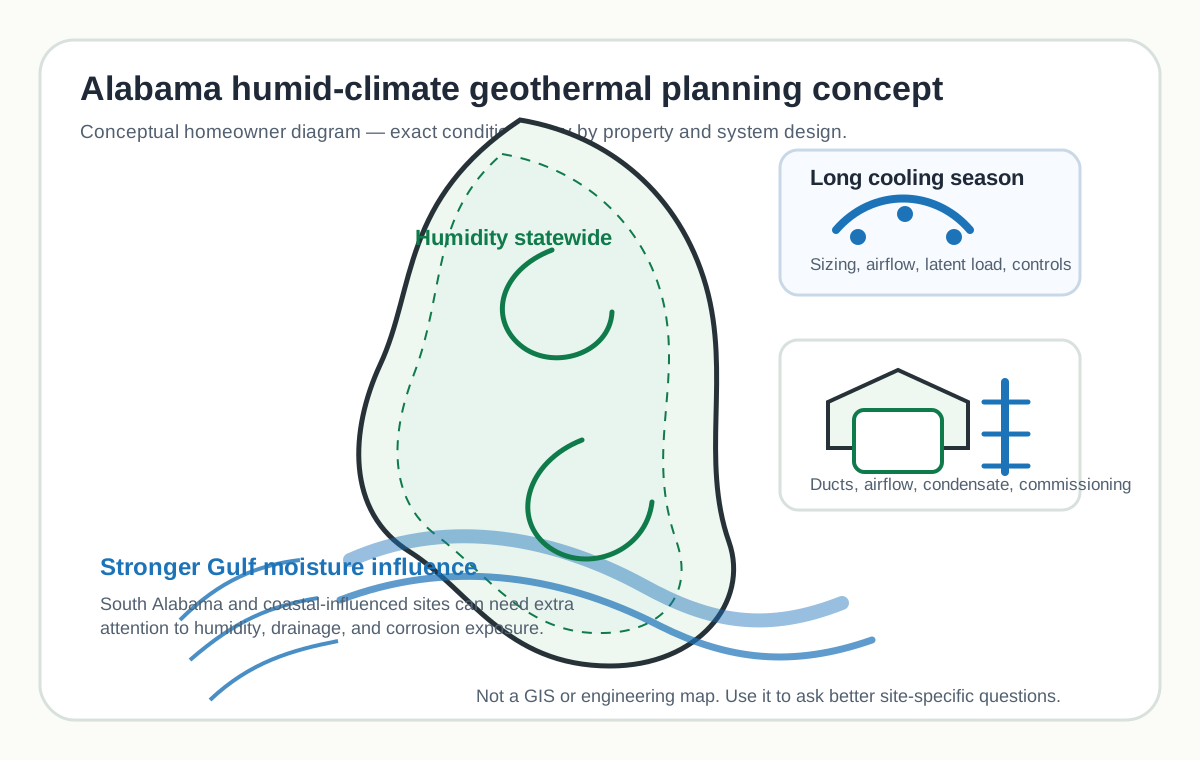
Alabama humid-climate map / diagram
Why humid climate changes Alabama geothermal planning
Humidity matters because comfort is not just an air-temperature number. Two Alabama homes can show the same thermostat setting while one feels comfortable and the other feels damp, clammy, or uneven. A geothermal system can be designed to perform well in a humid climate, but the design has to respect both sensible cooling and moisture removal. That is why a careful installer looks beyond the outdoor unit replacement mindset and studies the whole home.
Alabama’s climate summaries describe a state with warm conditions, substantial rainfall, and strong regional influence from the Gulf in the south. For geothermal homeowners, that broad climate context should become practical questions: How long will the system operate in cooling mode? How will it behave on mild but humid days? Does the home have attic ducts, crawlspace leakage, or return-air shortages? Is condensate drainage dependable? Are controls set up to avoid short-cycling?
Humidity also affects proposal review. A proposal that only lists equipment capacity and loop type may leave out the details that make an Alabama installation satisfying. Homeowners should look for a documented load calculation, a duct or distribution review, an explanation of latent moisture control, commissioning measurements, and a plan for filter access and maintenance. When the installer cannot explain those items, the proposal is not ready for a humid-climate decision.
Some uncertainty remains until a site-specific evaluation is done. Climate data can explain broad patterns, but it cannot see the homeowner’s ducts, crawlspace, room additions, shade, window exposure, drainage, indoor equipment location, or condensate route. A good guide can tell you what to ask; it cannot replace a qualified professional’s design.
The 13-step geothermal installation process adapted for Alabama humidity
The national installation sequence remains useful, but each step should be interpreted through Alabama’s humid climate and long cooling season. The emphasis below is not on telling homeowners how to install a system. It is on helping homeowners recognize the questions, documentation, and red flags that separate a thoughtful proposal from a generic one.
1. Project goals and home suitability

Before equipment is discussed, the homeowner and installer should define the comfort problem the project is meant to solve. In Alabama, that conversation must include rooms that feel sticky, shoulder-season days when the thermostat is satisfied but indoor air still feels damp, attic or crawlspace ducts, additions, sun exposure, and whether the home has existing ventilation or filtration concerns. A geothermal heat pump can be part of a very comfortable home, but it is not a shortcut around poor distribution or an unclear comfort goal.
What Alabama homeowners should ask: Ask how the installer will separate temperature complaints from moisture, duct, envelope, and control issues. A strong installer documents goals, existing equipment, duct locations, insulation observations, and known comfort complaints before recommending a loop. Red flags include treating humidity as an afterthought, promising comfort without inspecting the home, or selecting loop type before the property has been evaluated.
2. Load calculation and energy analysis

A room-by-room load calculation is especially important in a humid state because cooling load is not only about lowering air temperature. The design should consider sensible cooling, latent moisture removal, airflow, windows, insulation, duct leakage risk, and heating performance for colder periods. The calculation gives the installer a disciplined basis for equipment selection and staging instead of relying on the nameplate of the previous system.
What Alabama homeowners should ask: Ask whether the calculation uses current home details rather than a rule of thumb. Ask how latent load, indoor design conditions, and duct losses will be handled. Good documentation usually includes room loads, design assumptions, equipment matchups, and notes about any duct or envelope upgrades that affect comfort. A red flag is a proposal that skips the load calculation or says geothermal sizing is the same as replacing a conventional unit.
3. Site evaluation

The site evaluation connects the indoor load to the outdoor heat-exchange plan. For this guide, the humid-climate lens means the installer should also look at drainage, outdoor equipment access, condensate routing, crawlspace moisture context, landscaping, utilities, septic or well features, and any areas that stay wet after rain. Alabama properties can change quickly from dry-looking surface conditions to difficult excavation after stormy weather.
What Alabama homeowners should ask: Ask the installer to walk the lot with you and explain likely access paths, staging areas, loop zones, and sensitive areas to protect. Good installers document utility locating, drainage observations, possible loop-field locations, and areas that may be difficult during wet periods. Red flags include ignoring standing water, placing indoor equipment where condensate cannot be managed well, or failing to coordinate with existing site systems.
4. Loop-type screening

Humid climate does not automatically select a loop type, but it shapes the design conversation because the loop must support the equipment that manages long cooling-season operation. Horizontal, vertical, pond/lake, and open-loop options may all be screened where property conditions allow. The right screening asks which loop options can be designed, installed, tested, and maintained without compromising the home, yard, water, or future use of the property.
What Alabama homeowners should ask: Ask why each loop type was kept or ruled out. Good installers explain land area, soil, access, water-source limits, drilling or trenching constraints, and how the selected approach supports the calculated load. Red flags include saying one loop type is always best in Alabama, ignoring water-quality questions for open-loop ideas, or treating pond/lake availability as automatic suitability.
5. Equipment and system design review

Equipment selection should be reviewed through the lens of Alabama comfort. The homeowner should understand capacity staging, blower operation, controls, condensate management, auxiliary or backup integration if present, filtration, noise expectations, and how the system will remove moisture during long cooling periods. A high-efficiency unit still needs distribution and controls that fit the house.
What Alabama homeowners should ask: Ask how the proposed equipment will handle part-load cooling days and humidity. Ask whether the thermostat, blower settings, and distribution system are part of commissioning rather than left as defaults. Good documentation includes model numbers, capacity data, controls approach, air delivery assumptions, and any required duct or condensate work. Red flags include focusing only on efficiency labels while avoiding airflow and dehumidification details.
6. Proposal review and scope definition
A humid-climate geothermal proposal should make invisible work visible. It should state what is included for the load calculation, loop field, indoor equipment, duct or distribution work, condensate handling, electrical coordination, flushing, pressure testing, startup, documentation, and yard restoration. The homeowner should not have to infer whether moisture-control details are included.
What Alabama homeowners should ask: Ask for a written scope that separates geothermal equipment, ground loop work, indoor distribution, controls, commissioning, and exclusions. Good installers explain assumptions and contingencies in plain language. Red flags include vague wording such as “complete geothermal system” without defining the loop field, airflow work, condensate handling, or startup testing.
7. Permits, utility locating, and schedule planning
Alabama homeowners should expect utility locating and local permit questions to be handled before excavation, drilling, or water-source work. Humid weather patterns can affect schedules because saturated yards, heavy rain, and soft access routes may change when equipment can safely work. Planning should also consider protecting driveways, lawns, septic areas, wells, drainage swales, and indoor work areas.
What Alabama homeowners should ask: Ask who obtains permits, who calls for utility locating, and how weather delays are handled. Good installers document roles, inspection points, access routes, and homeowner preparation. Red flags include starting ground work before utilities are marked, failing to discuss wet-weather access, or treating permits as the homeowner’s problem without explaining what is needed.
8. Drilling, trenching, or water-source preparation
The ground-work step differs by loop type, but humidity-related concerns often show up as drainage, mud, erosion, access, and restoration planning. Horizontal trenches may need careful timing and backfill practices. Vertical drilling may need spoils management and driveway protection. Water-source ideas require conservative review of water quality, withdrawal, return or discharge, and local requirements.
What Alabama homeowners should ask: Ask how the crew will manage wet soil, runoff, spoils, and restoration. Good installers explain what happens if rain arrives, how trenches or boreholes will be protected, and how water-source work will be reviewed before commitment. Red flags include casual open-loop promises, unclear discharge assumptions, or no plan for muddy access and erosion.
9. Loop installation and field assembly
Loop installation should follow the approved design rather than improvising in the field. The humid-climate issue is not the pipe itself but the need for a reliable heat-exchange field that supports many cooling hours and returns predictable entering-water temperatures to the heat pump. Pipe placement, header routing, manifolds, separation from other site features, and protection from damage all matter.
What Alabama homeowners should ask: Ask to see the loop layout or as-built plan after installation. Good installers document pipe type, loop layout, header locations, bore or trench records when applicable, and any field changes. Red flags include undocumented rerouting, unprotected pipe near future digging areas, or no explanation of how field changes were approved.
10. Fusion, flushing, pressure testing, and fluid setup
The loop is hidden after installation, so testing is one of the homeowner’s most important protection points. Fusion quality, flushing, purging air, pressure testing, and fluid setup should be performed and documented by qualified personnel. In a cooling-heavy climate, reliable flow and clean commissioning help avoid comfort complaints that are later blamed on the heat pump.
What Alabama homeowners should ask: Ask what pressure test will be documented and how flow will be verified. Good installers provide test results, fluid details where applicable, and startup measurements. Red flags include no written test record, no explanation of purge procedure, or reluctance to document loop performance before burial or final handoff.
11. Indoor equipment and distribution integration
This is the heart of the humid-climate guide. Ductwork, airflow, return paths, registers, filters, condensate drainage, and controls can determine whether the system actually feels comfortable. Existing ducts in attics or crawlspaces may need sealing, resizing, insulation, balancing, or replacement. Hydronic or radiant applications need their own distribution review.
What Alabama homeowners should ask: Ask how airflow will be measured and adjusted, how condensate will be handled, and whether duct leakage or insulation issues are included in the scope. Good installers document blower settings, static pressure checks, duct recommendations, condensate routing, and filter access. Red flags include replacing equipment while ignoring leaky ducts, undersized returns, poor drainage, or uncomfortable rooms.
12. Controls, startup, and commissioning

Startup is not just turning the system on. The installer should verify operating modes, thermostat setup, staging, airflow, loop temperatures, entering and leaving water temperatures, condensate removal, safety controls, and homeowner settings. In Alabama, commissioning should confirm that the system is not short-cycling through mild humid weather and that dehumidification strategy is understood.
What Alabama homeowners should ask: Ask for commissioning readings and an explanation of what they mean. Good installers record startup data, control settings, airflow or static-pressure observations, and any follow-up adjustments. Red flags include leaving immediately after the system runs, no written startup sheet, or no discussion of humidity settings and seasonal operation.
13. Homeowner walkthrough, documentation, and maintenance expectations
The final walkthrough should teach the homeowner how to operate the system without turning it into a DIY installation manual. The homeowner should know how to use controls, change filters, watch for drainage issues, recognize humidity complaints that need service, protect the loop-field area, and keep records for future work.
What Alabama homeowners should ask: Ask for as-built documents, equipment manuals, startup data, maintenance expectations, and a list of who to call for loop, equipment, controls, or distribution questions. Good installers explain normal operation and warning signs. Red flags include no documentation, no loop-field map, or instructions that encourage unqualified work on sealed, electrical, or underground components.
Loop type implications in Alabama humid-climate projects
Loop type is important, but it is only one part of humid-climate comfort. Alabama humidity may affect runtime, equipment staging, airflow, condensate handling, and commissioning, but it does not make one loop type automatically best. A complete recommendation should connect the home’s load calculation, property conditions, indoor distribution, water conditions where relevant, and local requirements. Ask the installer to explain why each loop type may or may not fit the specific site.
Horizontal closed loop

Whether it may be relevant for this condition: A horizontal closed loop may be relevant for a humid Alabama project when the property has enough usable land and the loop can be sized for long cooling-season operation. Humidity alone does not favor horizontal loops; it simply raises the importance of a loop field and indoor system that can support steady comfort.
Site requirements: Horizontal loops often require open land, workable trenching conditions, safe separation from septic systems, wells, utilities, trees, driveways, drainage features, and future construction areas. Wet periods, clayey soils, compaction risk, and restoration expectations should be discussed before signing.
Strengths: This option can be considered on rural acreage or larger lots because it uses land area instead of multiple deep boreholes. It can be easier for homeowners to visualize and can fit projects where excavation access is practical.
Limitations: It may be impractical on tight lots, heavily landscaped yards, steep slopes, saturated areas, or parcels with limited usable open space. Poor restoration, wet trench conditions, or undocumented rerouting can create problems.
Alabama-specific considerations: Ask how Alabama rainfall, clay or mixed soils, warm-season runtime, and yard drainage affect trench timing and backfill. Good installers document loop layout, trench assumptions, restoration scope, and commissioning data. Red flags include “we always do horizontal,” vague trench locations, or no plan for wet weather and utilities.
Vertical closed loop

Whether it may be relevant for this condition: A vertical closed loop may be relevant for Alabama humid-climate projects when the home needs dependable cooling-season performance but the lot, landscaping, slopes, utilities, or access make broad horizontal trenching less practical. It is not automatically better for humidity; the indoor design still controls moisture comfort.
Site requirements: Vertical loops require drilling access, bore spacing, header routing, spoils management, grouting details, utility locating, and a contractor qualified for local drilling conditions. Driveway protection, overhead clearance, and equipment staging should be addressed.
Strengths: Vertical loops can often reduce surface disruption compared with a large horizontal field and may fit suburban lots or properties where usable open land is limited. They may also allow a more compact loop-field footprint.
Limitations: Drilling conditions, bore depth, grouting, access, and subsurface surprises can affect the project. A vertical proposal that does not explain drilling assumptions or commissioning measurements is incomplete.
Alabama-specific considerations: Northern or hilly areas may raise rock or access questions, while southern or wetter sites may raise staging and drainage questions. Ask the installer to explain expected geology, bore records, grout, header location, and startup readings. Red flags include no drilling contingency, no bore documentation, or promises based only on lot size.
Pond/lake closed loop

Whether it may be relevant for this condition: A pond/lake closed loop may be relevant for humid Alabama properties with an appropriate private water body, but only after careful evaluation. Humid weather and long cooling seasons make performance verification important; the pond is not a substitute for indoor humidity design.
Site requirements: Suitability depends on size, depth, seasonal stability, ownership, environmental constraints, sediment, routing distance, water-level variation, protection from damage, and permission to place and maintain loop coils.
Strengths: Where a water body is truly suitable, a pond/lake loop can avoid some trenching or drilling and may be a practical closed-loop option for rural properties.
Limitations: Many ponds are too shallow, seasonal, shared, sediment-heavy, hard to access, or environmentally constrained. Storms, drought, fluctuating water levels, and future pond use can complicate the design.
Alabama-specific considerations: Ask how the installer evaluates pond depth, summer water temperature, storm impacts, routing, and ownership rights. Red flags include “you have a pond, so it will work,” no depth or seasonal review, or no protection plan for the loop.
Open-loop well system

Whether it may be relevant for this condition: An open-loop well system may be relevant only on sites with suitable water supply, water quality, approved return or discharge, and local permission. It should never be recommended merely because Alabama is humid or because a property has a well.
Site requirements: The installer should evaluate well yield, pumping requirements, water chemistry, filtration, scaling, corrosion, iron or sediment risk, discharge or return method, nearby wells, and applicable permits or approvals.
Strengths: On a site where water conditions are genuinely suitable and professionally verified, an open-loop system can be considered as a water-source geothermal option.
Limitations: Water-quality problems, discharge restrictions, fouling, pumping energy, well interference, maintenance, and regulatory requirements can make this option inappropriate. It can create long-term service obligations that closed loops avoid.
Alabama-specific considerations: Ask who tests water, who confirms withdrawal and discharge rules, and what happens if water quality changes. Good installers document water analysis, flow assumptions, approvals, and maintenance expectations. Red flags include casual discharge assumptions, no water test, or no explanation of corrosion/scaling risk.
Standing column well

Whether it may be relevant for this condition: A standing column well is generally a specialized discussion, not a standard humid-climate recommendation. It may only deserve cautious review where local geology, groundwater behavior, well construction practice, water quality, and local requirements make it plausible.
Site requirements: This concept requires experienced design, suitable bedrock or hydrogeologic conditions, water-quality review, well-performance data, permitting review, and a clear plan for operation and maintenance. Homeowners should ask for local project experience rather than generic claims.
Strengths: In regions and sites where it is appropriate, it can use a well-based heat exchange concept with a compact surface footprint.
Limitations: It may be unsuitable where geology, groundwater behavior, water quality, rules, or installer experience do not support it. It can be more specialized than typical closed-loop options and should not be treated as a default menu item.
Alabama-specific considerations: Ask the installer to explain why this site, not just Alabama generally, supports the idea. Good documentation should include testing requirements, water-quality considerations, well details, approvals, and service expectations. Red flags include presenting it as universally applicable, skipping site-specific hydrogeologic review, or failing to explain return/discharge and water-quality questions.
Condition-specific site evaluation checklist
Use this checklist during site visits for an Alabama humid-climate geothermal proposal. It is not a design worksheet; it is a way for homeowners to confirm that humidity, airflow, drainage, and commissioning are being considered before the loop type is finalized.
Home and load
- Room-by-room load calculation planned or completed.
- Latent moisture load and part-load cooling behavior discussed.
- Existing comfort complaints documented by room and season.
- Attic, crawlspace, windows, insulation, and additions reviewed.
Indoor distribution
- Duct location, leakage risk, insulation, return air, and static pressure considered.
- Condensate routing and service access identified.
- Controls and humidity settings included in startup discussion.
- Filtration and maintenance access visible and practical.
Outdoor/site conditions
- Potential loop zones walked and marked conceptually.
- Drainage, wet areas, slopes, utilities, septic, wells, trees, and future construction discussed.
- Equipment access and weather-delay plan explained.
- Water-source ideas screened cautiously if raised.
Documentation
- Installer can explain why each loop type may or may not fit.
- Proposal promises commissioning readings, loop test records, and as-built information.
- Red flags and exclusions are written rather than verbal only.
Condition-specific proposal comparison checklist

| Proposal item | What a complete proposal should include | Why it matters for Alabama humid climate | Questions to ask | Red flags |
|---|---|---|---|---|
| Load calculation | Room-by-room heating/cooling loads, design assumptions, and latent moisture discussion. | Humidity comfort depends on more than temperature capacity. | How did you account for moisture and part-load days? | No load calculation or rule-of-thumb sizing. |
| Ducts and airflow | Duct inspection, return-air review, leakage/insulation notes, airflow or static-pressure plan. | Poor airflow can undermine dehumidification and comfort. | What duct work is included or excluded? | Installer ignores ducts or says they do not matter. |
| Loop selection | Explanation of horizontal, vertical, pond/lake, open-loop, and standing-column screening where relevant. | Humidity does not choose loop type; site conditions do. | Why is this loop appropriate for my property? | One loop type presented as always best. |
| Water-source work | Water quantity, quality, return/discharge, and permitting review if open-loop or specialized well ideas are raised. | Wet or humid climate is not proof of usable groundwater. | Who verifies water quality and approvals? | No water testing or vague discharge assumptions. |
| Condensate and controls | Drainage route, service access, thermostat/control strategy, and humidity-related startup settings. | Condensate and controls affect everyday comfort. | How will the system behave on mild humid days? | No controls explanation or no condensate plan. |
| Commissioning | Pressure testing, flushing, startup readings, airflow/control checks, and homeowner walkthrough. | Hidden loop and indoor performance must be verified. | What readings will I receive after startup? | No written commissioning report. |
Homeowner questions checklist
Load calculation
- Will you perform a room-by-room load calculation?
- How will latent humidity load and part-load cooling be addressed?
Site evaluation
- Which areas of my property can actually support a loop field?
- How do drainage, wet soil, slopes, utilities, septic, wells, trees, and access affect the plan?
Loop type
- Which loop types may be relevant, and which did you rule out?
- Why does the recommended loop fit this property rather than Alabama generally?
Drilling, trenching, or water-source work
- How will rain, mud, spoils, backfill, and restoration be handled?
- If water-source work is proposed, who verifies water quality, yield, return/discharge, and permits?
Indoor equipment
- What duct, airflow, return-air, condensate, filtration, or control work is included?
- How will you verify humidity comfort at startup?
Permits
- Who obtains permits and coordinates utility locating?
- What local approvals are needed for drilling, excavation, electrical work, or water use?
Testing and commissioning
- What pressure, flushing, flow, temperature, airflow, and control readings will be documented?
Warranty
- What is covered for equipment, loop piping, drilling/trenching work, controls, and labor?
Documentation
- Will I receive as-built loop information, manuals, startup data, and maintenance expectations?
Red flags specific to humid-climate geothermal proposals

- No room-by-room load calculation or no discussion of latent moisture load.
- Humidity complaints are dismissed as unrelated to design.
- Ductwork, return air, static pressure, filtration, condensate, and controls are ignored.
- A loop type is presented as always best for Alabama or always best for humid climates.
- Open-loop or standing-column ideas are proposed without water-quality, water-quantity, discharge/return, local approval, and site-specific documentation.
- Wet-weather access, drainage, mud, erosion, backfill, or restoration are not addressed.
- No pressure-test, flushing, startup, airflow, or commissioning records are promised.
- The installer encourages homeowner work on drilling, electrical, refrigerant, loop fusion, sealed-system components, or other qualified-professional tasks.
How to use this humid-climate guide during contractor conversations
Homeowners do not need to become engineers to use this guide well. The useful role for a homeowner is to ask whether the installer can connect the climate concern to the design decision. In a humid Alabama home, that connection should run from the load calculation to equipment selection, from equipment selection to airflow and distribution, from distribution to controls and condensate handling, and from those details to documented startup readings. If an installer can explain that chain clearly, the proposal is easier to compare. If the conversation jumps directly from “geothermal is efficient” to “here is the loop we usually install,” the homeowner should slow the process down and ask for the missing steps.
Humid-climate comfort is also a reminder that the loop field and the indoor system cannot be judged separately. A carefully built loop may still disappoint if the duct system leaks through a hot attic, if return air is undersized, if a crawlspace contributes moisture, if condensate drainage is unreliable, or if controls are left at generic settings. The reverse is also true: upgraded ducts and controls cannot rescue an undersized or poorly documented loop field. A complete Alabama proposal should show how both sides of the system work together.
When comparing proposals, do not penalize the installer who raises more questions. A detailed installer may identify duct repairs, condensate routing, utility conflicts, wet-weather access issues, or commissioning tasks that a thinner proposal ignores. Those details can make the proposal look more complex, but they are often the details that protect comfort after installation. The better comparison is not which proposal sounds simplest; it is which proposal explains assumptions, responsibilities, exclusions, testing, and follow-up.
Use everyday examples when talking with installers. Ask what happens on a mild but humid spring day, a long July afternoon, a rainy week when the yard is soft, or a bedroom that has always lagged behind the thermostat. Ask whether the system is expected to run longer at lower output, how blower settings affect moisture removal, how the thermostat should be used, and what readings will prove that the system was commissioned correctly. These questions keep the conversation focused on homeowner comfort rather than brand names or generic efficiency claims.
Finally, remember that this guide is condition-specific. It does not say that humid Alabama homes require one particular loop type. Instead, it says that humidity should sharpen the review of sizing, distribution, controls, condensate, loop performance, and documentation. Horizontal, vertical, pond/lake, open-loop, and standing column concepts may each be considered only when the property and professional evaluation support them. The installer should be able to explain why the recommended system fits the home, the lot, and the expected operating conditions.
Commissioning notes for humid Alabama homes
Commissioning deserves extra attention on this page because many humid-climate complaints appear only after the system is operating in real weather. A startup visit should not stop at confirming that the equipment turns on. The installer should verify operating modes, loop-side temperatures, air delivery, condensate removal, thermostat setup, staging behavior, and any manufacturer-required startup steps. The homeowner should receive enough explanation to know what normal operation looks like and what symptoms should trigger a service call.
For ducted systems, ask whether airflow and static pressure were checked or otherwise evaluated. Ask whether return air is adequate, whether filter selection creates excessive restriction, whether supply registers are balanced well enough for problem rooms, and whether attic or crawlspace ducts need sealing or insulation improvements. These items matter because moisture removal is affected by runtime, airflow, coil operation, and control settings. A geothermal heat pump can be efficient and still feel disappointing if air distribution is not matched to the home.
For any loop type, ask for documentation that connects the hidden work to the startup results. Closed loops should have pressure-testing and flushing records. Water-source concepts should have water-quality, flow, discharge or return, and maintenance documentation where applicable. Vertical and specialized well projects should have drilling or well records appropriate to the work performed. Horizontal projects should have a loop layout or as-built sketch so future digging, landscaping, or construction does not accidentally damage the field.
A good final walkthrough should be practical rather than technical theater. The installer should show the homeowner where filters are, where condensate drains, what controls should and should not be changed, what maintenance is homeowner-level, and what work requires a qualified technician. The walkthrough should also explain that Alabama humidity can make comfort complaints show up during shoulder-season weather, not only peak summer heat. That is why follow-up support and documented settings matter.
One useful comparison method is to ask each installer to describe the first three things they would verify if the home felt cool but still damp after installation. Strong answers usually mention airflow, runtime or staging, controls, duct leakage or return air, condensate drainage, and commissioning readings. Weak answers often blame homeowner expectations without first checking the design and startup data. This question is simple, but it reveals whether the company thinks about humidity as part of system performance.
For Alabama homeowners, the safest takeaway is to require site-specific explanation. The installer should be able to say what was measured, what was assumed, what remains uncertain, and what will be verified after startup.
That written explanation makes later proposal comparison, warranty review, and service follow-up much clearer.
Keep it with the project records.
FAQ: Alabama humid-climate geothermal installation
Does Alabama humidity mean geothermal is a poor fit?
No. Geothermal can be considered in humid Alabama homes, but the design must address moisture control, airflow, ductwork, condensate, controls, and commissioning. The installer should explain how the proposed system handles both temperature and humidity.
Does humid climate determine which loop type is best?
No. Humidity may affect runtime and comfort priorities, but loop type depends on the site. Horizontal, vertical, pond/lake, open-loop, and standing column concepts each depend on land, soil or geology, access, water conditions where relevant, and local requirements.
What should I ask if my home already feels sticky in summer?
Ask for a room-by-room load calculation, duct and return-air review, airflow discussion, condensate plan, control strategy, and commissioning readings. Existing humidity complaints should be documented before equipment and loop decisions are finalized.
Can existing ducts be reused with a geothermal system?
Sometimes, but reuse should depend on inspection. Duct leakage, attic or crawlspace location, return-air limits, insulation, static pressure, and room balance can all affect humid-climate comfort.
Is a pond or lake loop a good choice for humid Alabama properties?
It may be considered only if the water body is suitable. Depth, seasonal stability, ownership, environmental constraints, routing, sediment, and protection from damage must be evaluated. A visible pond is not enough by itself.
Should an open-loop well system be considered because Alabama is humid?
No. Open-loop relevance depends on verified water quantity, water quality, discharge or return requirements, approvals, pumping requirements, and maintenance expectations. Humid weather is not proof that groundwater is suitable.
When is a standing column well worth discussing?
Only cautiously and site-specifically. It may deserve review where local geology, groundwater behavior, well construction practice, water quality, and local requirements support it. It should not be presented as a default Alabama option.
What should be documented at startup?
Ask for startup and commissioning records, including relevant loop temperatures or water-side readings, pressure/flushing records where applicable, airflow or control observations, condensate confirmation, thermostat settings, and homeowner operating guidance.
Sources and references
The sources below were reviewed while preparing this Alabama humid-climate condition guide. Each entry includes the title, publisher, link, and reason it was used.
- Title: Alabama — State Climate Summaries 2022. Publisher/organization: NOAA/NCEI State Climate Summaries. Link: https://statesummaries.ncics.org/chapter/al/. Reason used: Used for broad Alabama climate context, including temperature, rainfall, and Gulf-influenced regional framing.
- Title: A Brief Guide to Mold, Moisture and Your Home. Publisher/organization: U.S. Environmental Protection Agency. Link: https://www.epa.gov/mold/brief-guide-mold-moisture-and-your-home. Reason used: Used for homeowner moisture-control context and the importance of addressing moisture sources rather than treating humidity as only a thermostat issue.
- Title: Geothermal Heat Pumps. Publisher/organization: U.S. Department of Energy Energy Saver. Link: https://www.energy.gov/energysaver/geothermal-heat-pumps. Reason used: Used for general geothermal heat pump concepts and homeowner education framing.
- Title: Geothermal Heat Pumps. Publisher/organization: ENERGY STAR. Link: https://www.energystar.gov/products/geothermal_heat_pumps. Reason used: Used for geothermal product-category context and quality-installation awareness.
- Title: Heat Pump Systems. Publisher/organization: U.S. Department of Energy Energy Saver. Link: https://www.energy.gov/energysaver/heat-pump-systems. Reason used: Used for heat-pump operating context relevant to homeowner explanations of sizing, controls, and indoor comfort.
Homeowner Installation Planning Checklist
Use this checklist with the existing Alabama guide context. It organizes contractor questions; it does not replace parcel-level investigation or current local requirements.
Site & ground conditions
- State context: Homeowner-focused Alabama geothermal installation guide covering humid climate, clay soils, site evaluation, loop options, installer questions, proposal red flags, and links to Alabama geothermal installers.
- Soil: Ask what soil profile and moisture assumptions support trenching, thermal performance, backfill, compaction, drainage and restoration scope.
- Climate: Ask the contractor to show how this documented state condition changes the site evaluation, system design, scope or commissioning plan.
- Loop Options: Ask the contractor to compare feasible horizontal, vertical, water-body and any proposed open-loop option using documented site and ground evidence.
- Property conflicts: Mark utilities, wells, septic components, drainage, easements, structures and protected landscaping before fixing a loop location.
- Access and restoration: Document equipment access, staging, spoils, dewatering where relevant, weather limits and responsibility for restoring disturbed surfaces.
System design
- Load basis: Request a room-by-room heating and cooling load calculation tied to the actual envelope, ventilation, occupancy and local design weather.
- Loop rationale: Require the proposal to explain the selected loop type, sizing assumptions, layout, materials, pumping and why alternatives were rejected.
- Indoor system: Confirm that ducts or other distribution, airflow, electrical capacity, condensate handling, controls and auxiliary heat were evaluated.
Proposal review
- Normalize scope: Compare equipment model and capacity, loop materials, drilling or excavation, grouting or backfill, electrical, ducts, permits, disposal and restoration.
- Define responsibilities: Identify every subcontractor, permit owner, commissioning party, warranty provider, exclusion, allowance and changed-condition trigger.
- Commissioning: Require recorded airflow, temperatures, loop flow or pressure, pump and control operation, auxiliary heat checks and homeowner instruction as applicable.
Before work begins
- Keep the signed scope, load calculation, site and loop drawings, equipment data, permit plan, schedule, payment terms, warranties and change-order process together.
- Confirm utility marking, access dates, protection of wells and septic systems, restoration limits, startup records and the final documents the contractor will deliver.