Alabama condition guide
Alabama Clay Soil Geothermal Installation Guide
A homeowner-focused guide to how clay soils and clayey subsoils in Alabama can affect geothermal trenching, drainage, backfill, compaction, loop-field planning, and yard restoration.
Clay soil is not a reason to dismiss geothermal, but it is a reason to ask better questions before outdoor work begins. On some Alabama properties, clayey soil can be sticky when wet, firm or difficult when dry, slow to drain, sensitive to compaction, and challenging to restore after trenching or equipment traffic. Those conditions can affect horizontal loop planning, drilling access, header trenches, backfill choices, erosion control, and the homeowner’s expectations for the yard after installation.
This guide builds on the national geothermal installation guide and the Alabama geothermal installation guide, but it focuses specifically on clay soil. Use it with the Alabama geothermal installers directory when comparing contractors.
Quick-scan summary for Alabama homeowners
Guide navigation
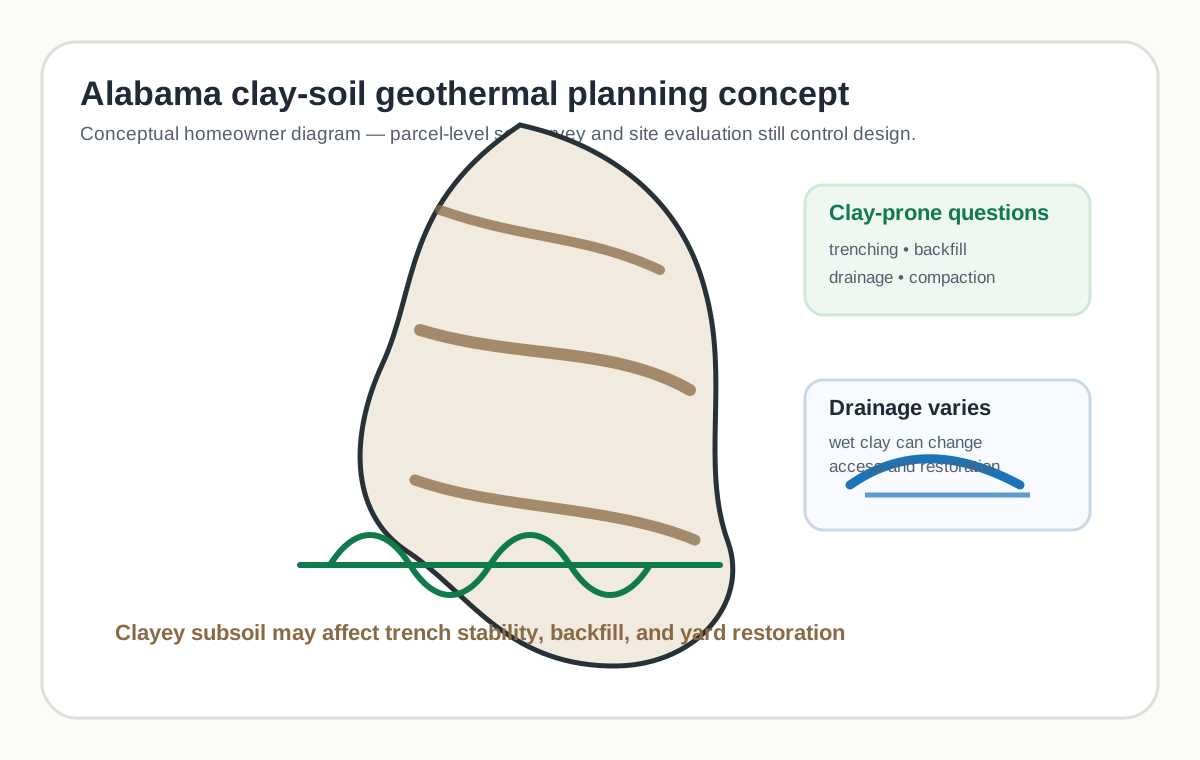
Alabama clay soil map / diagram
Why clay soil changes Alabama geothermal planning
Clay soil matters because geothermal ground work depends on predictable outdoor installation conditions. A clayey yard may look ordinary during a dry visit and become difficult after rain. It may also compact under heavy equipment, hold water in disturbed areas, or require careful backfill so trenches do not settle unevenly. These issues do not determine the heat pump model by themselves, but they can affect how loop options are screened and how the proposal should describe outdoor work.
Alabama homeowners should treat clay as a site-evaluation topic. Some properties have clayey subsoils in only part of the yard. Others may have fill, disturbed soil, low drainage paths, slopes, tree roots, septic fields, wells, utilities, or future building areas that matter more than the general soil label. A credible installer should use available soil information, site observations, and professional experience to explain the recommended approach.
The most important homeowner protection is documentation. The proposal should describe where trenches or bore headers may go, how utility locating will be handled, what soil or drainage assumptions are being made, what restoration is included, what happens if conditions differ, and what records the homeowner receives after burial.
The 13-step geothermal installation process adapted for Alabama clay soil
1. Project goals and home suitability

For clay-soil projects, this step should define comfort goals and yard expectations before clay soil becomes a construction surprise. Clay does not make geothermal impossible, but it can change how the outdoor work is planned and explained. Homeowners should expect the installer to connect the soil conversation to the actual site rather than using statewide shortcuts.
Ask: What will you document for this step, and what changes if clay is wet, dense, unstable, or hard to restore? Red flags: vague answers about backfill, no site walk, no restoration plan, or a recommendation made before soil and drainage conditions are considered.
2. Load calculation and energy analysis
For clay-soil projects, this step should avoid sizing by old equipment and keep soil work tied to the calculated load. Clay does not make geothermal impossible, but it can change how the outdoor work is planned and explained. Homeowners should expect the installer to connect the soil conversation to the actual site rather than using statewide shortcuts.
Ask: What will you document for this step, and what changes if clay is wet, dense, unstable, or hard to restore? Red flags: vague answers about backfill, no site walk, no restoration plan, or a recommendation made before soil and drainage conditions are considered.
3. Site evaluation

For clay-soil projects, this step should walk the property to identify clayey areas, drainage paths, access routes, utilities, septic, wells, trees, and restoration constraints. Clay does not make geothermal impossible, but it can change how the outdoor work is planned and explained. Homeowners should expect the installer to connect the soil conversation to the actual site rather than using statewide shortcuts.
Ask: What will you document for this step, and what changes if clay is wet, dense, unstable, or hard to restore? Red flags: vague answers about backfill, no site walk, no restoration plan, or a recommendation made before soil and drainage conditions are considered.
4. Loop-type screening

For clay-soil projects, this step should compare horizontal, vertical, pond/lake, open-loop, and standing column concepts without assuming one is best. Clay does not make geothermal impossible, but it can change how the outdoor work is planned and explained. Homeowners should expect the installer to connect the soil conversation to the actual site rather than using statewide shortcuts.
Ask: What will you document for this step, and what changes if clay is wet, dense, unstable, or hard to restore? Red flags: vague answers about backfill, no site walk, no restoration plan, or a recommendation made before soil and drainage conditions are considered.
5. Equipment and system design review
For clay-soil projects, this step should review equipment and indoor distribution while keeping ground work separate from comfort design. Clay does not make geothermal impossible, but it can change how the outdoor work is planned and explained. Homeowners should expect the installer to connect the soil conversation to the actual site rather than using statewide shortcuts.
Ask: What will you document for this step, and what changes if clay is wet, dense, unstable, or hard to restore? Red flags: vague answers about backfill, no site walk, no restoration plan, or a recommendation made before soil and drainage conditions are considered.
6. Proposal review and scope definition
For clay-soil projects, this step should spell out trenching, drilling, backfill, compaction, drainage, restoration, testing, and exclusions. Clay does not make geothermal impossible, but it can change how the outdoor work is planned and explained. Homeowners should expect the installer to connect the soil conversation to the actual site rather than using statewide shortcuts.
Ask: What will you document for this step, and what changes if clay is wet, dense, unstable, or hard to restore? Red flags: vague answers about backfill, no site walk, no restoration plan, or a recommendation made before soil and drainage conditions are considered.
7. Permits, utility locating, and schedule planning
For clay-soil projects, this step should plan utility locating, permits, weather delays, and wet-yard access before heavy equipment arrives. Clay does not make geothermal impossible, but it can change how the outdoor work is planned and explained. Homeowners should expect the installer to connect the soil conversation to the actual site rather than using statewide shortcuts.
Ask: What will you document for this step, and what changes if clay is wet, dense, unstable, or hard to restore? Red flags: vague answers about backfill, no site walk, no restoration plan, or a recommendation made before soil and drainage conditions are considered.
8. Drilling, trenching, or water-source preparation

For clay-soil projects, this step should adapt trenching, drilling, or water-source preparation to wet or dense clay conditions. Clay does not make geothermal impossible, but it can change how the outdoor work is planned and explained. Homeowners should expect the installer to connect the soil conversation to the actual site rather than using statewide shortcuts.
Ask: What will you document for this step, and what changes if clay is wet, dense, unstable, or hard to restore? Red flags: vague answers about backfill, no site walk, no restoration plan, or a recommendation made before soil and drainage conditions are considered.
9. Loop installation and field assembly

For clay-soil projects, this step should assemble loop fields according to design rather than improvising around hard or sticky soils. Clay does not make geothermal impossible, but it can change how the outdoor work is planned and explained. Homeowners should expect the installer to connect the soil conversation to the actual site rather than using statewide shortcuts.
Ask: What will you document for this step, and what changes if clay is wet, dense, unstable, or hard to restore? Red flags: vague answers about backfill, no site walk, no restoration plan, or a recommendation made before soil and drainage conditions are considered.
10. Fusion, flushing, pressure testing, and fluid setup

For clay-soil projects, this step should document fusion, flushing, pressure testing, and fluid setup before the loop is hidden. Clay does not make geothermal impossible, but it can change how the outdoor work is planned and explained. Homeowners should expect the installer to connect the soil conversation to the actual site rather than using statewide shortcuts.
Ask: What will you document for this step, and what changes if clay is wet, dense, unstable, or hard to restore? Red flags: vague answers about backfill, no site walk, no restoration plan, or a recommendation made before soil and drainage conditions are considered.
11. Indoor equipment and distribution integration
For clay-soil projects, this step should integrate indoor equipment without blaming clay soil for duct or airflow problems. Clay does not make geothermal impossible, but it can change how the outdoor work is planned and explained. Homeowners should expect the installer to connect the soil conversation to the actual site rather than using statewide shortcuts.
Ask: What will you document for this step, and what changes if clay is wet, dense, unstable, or hard to restore? Red flags: vague answers about backfill, no site walk, no restoration plan, or a recommendation made before soil and drainage conditions are considered.
12. Controls, startup, and commissioning
For clay-soil projects, this step should commission the complete system with loop and indoor readings. Clay does not make geothermal impossible, but it can change how the outdoor work is planned and explained. Homeowners should expect the installer to connect the soil conversation to the actual site rather than using statewide shortcuts.
Ask: What will you document for this step, and what changes if clay is wet, dense, unstable, or hard to restore? Red flags: vague answers about backfill, no site walk, no restoration plan, or a recommendation made before soil and drainage conditions are considered.
13. Homeowner walkthrough, documentation, and maintenance expectations
For clay-soil projects, this step should hand over as-built loop information and yard protection guidance. Clay does not make geothermal impossible, but it can change how the outdoor work is planned and explained. Homeowners should expect the installer to connect the soil conversation to the actual site rather than using statewide shortcuts.
Ask: What will you document for this step, and what changes if clay is wet, dense, unstable, or hard to restore? Red flags: vague answers about backfill, no site walk, no restoration plan, or a recommendation made before soil and drainage conditions are considered.
Loop type implications for Alabama clay soil sites
Clay soil does not make one loop type universally best. It changes the questions: Can trenches be safely opened and backfilled? Will wet clay rut the yard? Can compaction or poor drainage damage restoration? Would drilling reduce surface disturbance? Ask the installer to explain how site conditions shape the recommendation.
Horizontal closed loop

Whether it may be relevant for this condition: Horizontal closed loop may be relevant because trenches and backfill are central to many horizontal designs. It depends on usable land, trench stability, drainage, and restoration expectations.
Site requirements: The installer should evaluate working area, equipment access, drainage, utilities, septic and wells, future construction, soil moisture, and restoration needs. For water-source concepts, water quantity, quality, and approvals must be reviewed separately.
Strengths: This option can be considered when its surface disturbance, drilling or water-source needs, and long-term documentation fit the property. The strength is site-dependent rather than statewide.
Limitations: Clay can make excavation sticky when wet, hard when dry, prone to rutting, and sensitive to backfill and compaction practices. Some sites may favor another loop type after review.
Alabama-specific considerations, homeowner questions, and red flags: Ask how Alabama rainfall, clayey subsoils, shrink/swell potential, drainage, and yard restoration affect the plan. Red flags include no soil review, no backfill explanation, no access plan, or an unsupported claim that one loop is always best.
Vertical closed loop

Whether it may be relevant for this condition: Vertical closed loop may be relevant where clayey surface conditions, limited land, mature landscaping, or restoration concerns make broad trenching less attractive. Drilling access and grout details still matter.
Site requirements: The installer should evaluate working area, equipment access, drainage, utilities, septic and wells, future construction, soil moisture, and restoration needs. For water-source concepts, water quantity, quality, and approvals must be reviewed separately.
Strengths: This option can be considered when its surface disturbance, drilling or water-source needs, and long-term documentation fit the property. The strength is site-dependent rather than statewide.
Limitations: Clay can make excavation sticky when wet, hard when dry, prone to rutting, and sensitive to backfill and compaction practices. Some sites may favor another loop type after review.
Alabama-specific considerations, homeowner questions, and red flags: Ask how Alabama rainfall, clayey subsoils, shrink/swell potential, drainage, and yard restoration affect the plan. Red flags include no soil review, no backfill explanation, no access plan, or an unsupported claim that one loop is always best.
Pond/lake closed loop

Whether it may be relevant for this condition: Pond/lake closed loop may be relevant only if a suitable water body exists. Clay soils around the pond may affect routing, bank disturbance, equipment access, and restoration.
Site requirements: The installer should evaluate working area, equipment access, drainage, utilities, septic and wells, future construction, soil moisture, and restoration needs. For water-source concepts, water quantity, quality, and approvals must be reviewed separately.
Strengths: This option can be considered when its surface disturbance, drilling or water-source needs, and long-term documentation fit the property. The strength is site-dependent rather than statewide.
Limitations: Clay can make excavation sticky when wet, hard when dry, prone to rutting, and sensitive to backfill and compaction practices. Some sites may favor another loop type after review.
Alabama-specific considerations, homeowner questions, and red flags: Ask how Alabama rainfall, clayey subsoils, shrink/swell potential, drainage, and yard restoration affect the plan. Red flags include no soil review, no backfill explanation, no access plan, or an unsupported claim that one loop is always best.
Open-loop well system

Whether it may be relevant for this condition: Open-loop well system is not selected because of clay. It may be considered only if water quantity, quality, discharge or return, and approvals are suitable.
Site requirements: The installer should evaluate working area, equipment access, drainage, utilities, septic and wells, future construction, soil moisture, and restoration needs. For water-source concepts, water quantity, quality, and approvals must be reviewed separately.
Strengths: This option can be considered when its surface disturbance, drilling or water-source needs, and long-term documentation fit the property. The strength is site-dependent rather than statewide.
Limitations: Clay can make excavation sticky when wet, hard when dry, prone to rutting, and sensitive to backfill and compaction practices. Some sites may favor another loop type after review.
Alabama-specific considerations, homeowner questions, and red flags: Ask how Alabama rainfall, clayey subsoils, shrink/swell potential, drainage, and yard restoration affect the plan. Red flags include no soil review, no backfill explanation, no access plan, or an unsupported claim that one loop is always best.
Standing column well

Whether it may be relevant for this condition: Standing column well is a specialized regional and site-specific concept. It should only be discussed where geology, groundwater behavior, well practice, water quality, and local rules support it.
Site requirements: The installer should evaluate working area, equipment access, drainage, utilities, septic and wells, future construction, soil moisture, and restoration needs. For water-source concepts, water quantity, quality, and approvals must be reviewed separately.
Strengths: This option can be considered when its surface disturbance, drilling or water-source needs, and long-term documentation fit the property. The strength is site-dependent rather than statewide.
Limitations: Clay can make excavation sticky when wet, hard when dry, prone to rutting, and sensitive to backfill and compaction practices. Some sites may favor another loop type after review.
Alabama-specific considerations, homeowner questions, and red flags: Ask how Alabama rainfall, clayey subsoils, shrink/swell potential, drainage, and yard restoration affect the plan. Red flags include no soil review, no backfill explanation, no access plan, or an unsupported claim that one loop is always best.
Condition-specific site evaluation checklist
Soil and drainage
- Review Web Soil Survey or other soil information for the parcel.
- Identify wet areas, slow drainage, slopes, and erosion paths.
- Discuss whether clay is likely near trench depth or only near the surface.
Access and protection
- Confirm equipment routes and driveway/lawn protection.
- Mark utilities, septic, wells, trees, and future construction areas.
- Plan for rain delays and rut prevention.
Backfill and restoration
- Ask how trenches will be backfilled and settled.
- Clarify grading, topsoil handling, seed/sod expectations, and repair limits.
- Document who handles erosion or drainage problems after work.
Condition-specific proposal comparison checklist

| Proposal item | What a complete proposal should include | Why it matters for Alabama clay soil | Questions to ask | Red flags |
|---|---|---|---|---|
| Soil review | Parcel soil information, site observations, and assumptions. | Clay varies by location and depth. | What soil information did you review? | No soil discussion. |
| Loop layout | Trench, bore, header, manifold, and routing concept. | Clay affects excavation and restoration. | Where will outdoor work occur? | Vague loop locations. |
| Drainage | Wet-weather plan, erosion control, and restoration expectations. | Disturbed clay can hold water or rut. | How will rain affect schedule? | No wet-site plan. |
| Backfill | Backfill approach, compaction expectations, and settlement responsibility. | Bad backfill can leave sunken trenches. | Who fixes settling? | No restoration scope. |
| Testing | Fusion, flushing, pressure testing, startup readings, and as-built documents. | The loop is hidden after clay is restored. | What records will I receive? | No written test records. |
Homeowner questions checklist
Load calculation
- How does the calculated load connect to the loop field?
Site evaluation
- What clay, drainage, slope, utility, septic, well, and access constraints did you identify?
Loop type
- Which loop types may be relevant, and which were ruled out because of clay or site constraints?
Drilling/trenching/water-source work
- How will wet clay, dense clay, spoils, backfill, rutting, and restoration be handled?
Indoor equipment
- What indoor work is separate from outdoor soil conditions?
Permits
- Who handles utility locating, permits, and inspections?
Testing and commissioning
- What loop test and startup records will I receive?
Warranty
- What is covered for underground work and yard restoration?
Documentation
- Will I receive an as-built loop map?
Red flags specific to Alabama clay-soil geothermal proposals

- No soil, drainage, or access discussion before loop selection.
- Unsupported claim that one loop type is always best for clay soil.
- No written backfill, compaction, settlement, or restoration scope.
- No utility, septic, well, tree, or future-construction review.
- No pressure-test, flushing, startup, or as-built documentation.
- DIY excavation, fusion, drilling, electrical, or sealed-system suggestions.
How to use this clay-soil guide during contractor conversations
Clay-soil conversations should be practical and property-specific. Ask the installer to point to the actual areas where work may occur and describe what would change if the soil is wet, dense, soft, sticky, or difficult to restore. Ask whether the crew expects to stockpile spoils, protect access routes, separate topsoil, import bedding or backfill material, or return after settlement. These are not cosmetic questions. They affect whether the hidden loop field is installed cleanly and whether the yard remains usable after the work.
Homeowners should also separate soil issues from indoor comfort issues. Clay can complicate outdoor work, but it does not explain duct leakage, poor airflow, weak controls, or an incomplete load calculation. A complete geothermal proposal should handle both sides: a site-specific ground plan and a home-specific equipment and distribution plan. If the installer blames every question on soil or ignores the soil entirely, ask for a clearer written scope.
The safest approach is to require assumptions in writing. Good proposals explain what is known, what is uncertain, what is included, what is excluded, and what happens if field conditions differ from expectations. That written record helps homeowners compare installers fairly and prevents the clay-soil discussion from becoming a vague verbal promise.
Clay-soil projects also deserve a clear restoration conversation. Homeowners should ask whether ruts, settling, surface grading, erosion repair, seed or sod establishment, and access-route repair are included or excluded. Some yards may look rough immediately after trenching or drilling support work, and some settling can appear later. The proposal should state what the installer will return to correct and what remains normal homeowner landscaping. If a contractor avoids that conversation, the homeowner may be surprised after the underground work is already covered.
Timing can matter. Clay that is workable in one season may become difficult after repeated rain, and heavy equipment can leave deeper tracks when the ground is soft. That does not mean a project must wait for perfect weather, but the schedule should include common-sense limits. Ask how the installer decides whether to proceed after rain, how equipment will enter and leave the yard, and how the crew protects areas that should not be compacted.
Finally, ask for as-built information. Once the loop is buried and the yard is restored, the homeowner needs a record of loop-field areas, header routes, manifolds where applicable, and sensitive zones to protect from future digging. This is especially important on clay sites because later drainage improvements, fencing, tree work, or landscaping may disturb the same ground. A simple as-built sketch is often one of the most valuable documents a homeowner can keep.
Ask the installer to explain the difference between installation disturbance and long-term performance risk. A clay yard may need careful repair even when the geothermal system itself is operating correctly.
Ask the installer to explain the difference between installation disturbance and long-term performance risk. A clay yard may need careful repair even when the geothermal system itself is operating correctly.
Ask the installer to explain the difference between installation disturbance and long-term performance risk. A clay yard may need careful repair even when the geothermal system itself is operating correctly.
Ask the installer to explain the difference between installation disturbance and long-term performance risk. A clay yard may need careful repair even when the geothermal system itself is operating correctly.
Ask the installer to explain the difference between installation disturbance and long-term performance risk. A clay yard may need careful repair even when the geothermal system itself is operating correctly.
Ask the installer to explain the difference between installation disturbance and long-term performance risk. A clay yard may need careful repair even when the geothermal system itself is operating correctly.
Ask the installer to explain the difference between installation disturbance and long-term performance risk. A clay yard may need careful repair even when the geothermal system itself is operating correctly.
Ask the installer to explain the difference between installation disturbance and long-term performance risk. A clay yard may need careful repair even when the geothermal system itself is operating correctly.
Ask the installer to explain the difference between installation disturbance and long-term performance risk. A clay yard may need careful repair even when the geothermal system itself is operating correctly.
Ask the installer to explain the difference between installation disturbance and long-term performance risk. A clay yard may need careful repair even when the geothermal system itself is operating correctly.
Ask the installer to explain the difference between installation disturbance and long-term performance risk. A clay yard may need careful repair even when the geothermal system itself is operating correctly.
Ask the installer to explain the difference between installation disturbance and long-term performance risk. A clay yard may need careful repair even when the geothermal system itself is operating correctly.
Ask the installer to explain the difference between installation disturbance and long-term performance risk. A clay yard may need careful repair even when the geothermal system itself is operating correctly.
Ask the installer to explain the difference between installation disturbance and long-term performance risk. A clay yard may need careful repair even when the geothermal system itself is operating correctly.
Ask the installer to explain the difference between installation disturbance and long-term performance risk. A clay yard may need careful repair even when the geothermal system itself is operating correctly.
Ask the installer to explain the difference between installation disturbance and long-term performance risk. A clay yard may need careful repair even when the geothermal system itself is operating correctly.
Ask the installer to explain the difference between installation disturbance and long-term performance risk. A clay yard may need careful repair even when the geothermal system itself is operating correctly.
Ask the installer to explain the difference between installation disturbance and long-term performance risk. A clay yard may need careful repair even when the geothermal system itself is operating correctly.
Ask the installer to explain the difference between installation disturbance and long-term performance risk. A clay yard may need careful repair even when the geothermal system itself is operating correctly.
Ask the installer to explain the difference between installation disturbance and long-term performance risk. A clay yard may need careful repair even when the geothermal system itself is operating correctly.
Ask the installer to explain the difference between installation disturbance and long-term performance risk. A clay yard may need careful repair even when the geothermal system itself is operating correctly.
Ask the installer to explain the difference between installation disturbance and long-term performance risk. A clay yard may need careful repair even when the geothermal system itself is operating correctly.
Ask the installer to explain the difference between installation disturbance and long-term performance risk. A clay yard may need careful repair even when the geothermal system itself is operating correctly.
Ask the installer to explain the difference between installation disturbance and long-term performance risk. A clay yard may need careful repair even when the geothermal system itself is operating correctly.
Ask the installer to explain the difference between installation disturbance and long-term performance risk. A clay yard may need careful repair even when the geothermal system itself is operating correctly.
Ask the installer to explain the difference between installation disturbance and long-term performance risk. A clay yard may need careful repair even when the geothermal system itself is operating correctly.
Ask the installer to explain the difference between installation disturbance and long-term performance risk. A clay yard may need careful repair even when the geothermal system itself is operating correctly.
Ask the installer to explain the difference between installation disturbance and long-term performance risk. A clay yard may need careful repair even when the geothermal system itself is operating correctly.
Ask the installer to explain the difference between installation disturbance and long-term performance risk. A clay yard may need careful repair even when the geothermal system itself is operating correctly.
Ask the installer to explain the difference between installation disturbance and long-term performance risk. A clay yard may need careful repair even when the geothermal system itself is operating correctly.
Ask the installer to explain the difference between installation disturbance and long-term performance risk. A clay yard may need careful repair even when the geothermal system itself is operating correctly.
Ask the installer to explain the difference between installation disturbance and long-term performance risk. A clay yard may need careful repair even when the geothermal system itself is operating correctly.
Ask the installer to explain the difference between installation disturbance and long-term performance risk. A clay yard may need careful repair even when the geothermal system itself is operating correctly.
Ask the installer to explain the difference between installation disturbance and long-term performance risk. A clay yard may need careful repair even when the geothermal system itself is operating correctly.
Ask the installer to explain the difference between installation disturbance and long-term performance risk. A clay yard may need careful repair even when the geothermal system itself is operating correctly.
Ask the installer to explain the difference between installation disturbance and long-term performance risk. A clay yard may need careful repair even when the geothermal system itself is operating correctly.
Ask the installer to explain the difference between installation disturbance and long-term performance risk. A clay yard may need careful repair even when the geothermal system itself is operating correctly.
Ask the installer to explain the difference between installation disturbance and long-term performance risk. A clay yard may need careful repair even when the geothermal system itself is operating correctly.
Ask the installer to explain the difference between installation disturbance and long-term performance risk. A clay yard may need careful repair even when the geothermal system itself is operating correctly.
Ask the installer to explain the difference between installation disturbance and long-term performance risk. A clay yard may need careful repair even when the geothermal system itself is operating correctly.
Ask the installer to explain the difference between installation disturbance and long-term performance risk. A clay yard may need careful repair even when the geothermal system itself is operating correctly.
Ask the installer to explain the difference between installation disturbance and long-term performance risk. A clay yard may need careful repair even when the geothermal system itself is operating correctly.
Ask the installer to explain the difference between installation disturbance and long-term performance risk. A clay yard may need careful repair even when the geothermal system itself is operating correctly.
Ask the installer to explain the difference between installation disturbance and long-term performance risk. A clay yard may need careful repair even when the geothermal system itself is operating correctly.
Ask the installer to explain the difference between installation disturbance and long-term performance risk. A clay yard may need careful repair even when the geothermal system itself is operating correctly.
Ask the installer to explain the difference between installation disturbance and long-term performance risk. A clay yard may need careful repair even when the geothermal system itself is operating correctly.
Ask the installer to explain the difference between installation disturbance and long-term performance risk. A clay yard may need careful repair even when the geothermal system itself is operating correctly.
Ask the installer to explain the difference between installation disturbance and long-term performance risk. A clay yard may need careful repair even when the geothermal system itself is operating correctly.
For clay soil, the most useful proposal is the one that turns uncertainty into a written plan. It should explain where the installer expects difficult digging, where wet-weather access may be limited, how disturbed soil will be managed, how the loop will be tested before burial, and what restoration follow-up is included. That kind of detail helps homeowners compare real scopes rather than sales language.
FAQ: Alabama clay soil geothermal installation
Does clay soil prevent geothermal installation?
No. Clay soil may affect trenching, backfill, drainage, access, and restoration, but it does not automatically prevent geothermal. A site-specific evaluation is required.
Is horizontal loop always best or worst in clay?
No. Horizontal loops may be considered on suitable land, but clay moisture, drainage, trench stability, access, and restoration must be reviewed.
Can vertical loops avoid clay-soil problems?
Vertical loops can reduce broad trenching, but they still require drilling access, header trenches, spoils handling, and restoration planning.
What should I ask about backfill?
Ask how excavated material will be handled, whether imported backfill is needed, how settlement is addressed, and who restores grading and surface cover.
Should I use a soil survey?
Soil survey information can help frame questions, but it does not replace a site visit. Exact conditions vary by parcel and depth.
Sources and references
- Title: Web Soil Survey. Publisher/organization: USDA Natural Resources Conservation Service. Link: https://www.nrcs.usda.gov/resources/data-and-reports/web-soil-survey. Reason used: Used for parcel-level soil survey context and homeowner guidance to avoid statewide soil assumptions.
- Title: Soil Texture Calculator. Publisher/organization: USDA Natural Resources Conservation Service. Link: https://www.nrcs.usda.gov/resources/education-and-teaching-materials/soil-texture-calculator. Reason used: Used for soil texture terminology and the distinction between clay, silt, and sand in homeowner explanations.
- Title: Soil Testing, Liming, and Fertilizing Wildlife Food Plots. Publisher/organization: Alabama Cooperative Extension System / Auburn University. Link: https://www.aces.edu/blog/topics/farming/soil-testing/. Reason used: Used as an Alabama Extension source for soil testing context and the importance of measured soil information.
- Title: Geothermal Heat Pumps. Publisher/organization: U.S. Department of Energy Energy Saver. Link: https://www.energy.gov/energysaver/geothermal-heat-pumps. Reason used: Used for general geothermal heat pump concepts and homeowner education framing.
- Title: Geothermal Heat Pumps. Publisher/organization: ENERGY STAR. Link: https://www.energystar.gov/products/geothermal_heat_pumps. Reason used: Used for geothermal product-category context and quality-installation awareness.
Homeowner Installation Planning Checklist
Use this checklist with the existing Alabama guide context. It organizes contractor questions; it does not replace parcel-level investigation or current local requirements.
Site & ground conditions
- State context: Homeowner-focused Alabama geothermal installation guide covering humid climate, clay soils, site evaluation, loop options, installer questions, proposal red flags, and links to Alabama geothermal installers.
- Soil: Ask what soil profile and moisture assumptions support trenching, thermal performance, backfill, compaction, drainage and restoration scope.
- Climate: Ask the contractor to show how this documented state condition changes the site evaluation, system design, scope or commissioning plan.
- Loop Options: Ask the contractor to compare feasible horizontal, vertical, water-body and any proposed open-loop option using documented site and ground evidence.
- Property conflicts: Mark utilities, wells, septic components, drainage, easements, structures and protected landscaping before fixing a loop location.
- Access and restoration: Document equipment access, staging, spoils, dewatering where relevant, weather limits and responsibility for restoring disturbed surfaces.
System design
- Load basis: Request a room-by-room heating and cooling load calculation tied to the actual envelope, ventilation, occupancy and local design weather.
- Loop rationale: Require the proposal to explain the selected loop type, sizing assumptions, layout, materials, pumping and why alternatives were rejected.
- Indoor system: Confirm that ducts or other distribution, airflow, electrical capacity, condensate handling, controls and auxiliary heat were evaluated.
Proposal review
- Normalize scope: Compare equipment model and capacity, loop materials, drilling or excavation, grouting or backfill, electrical, ducts, permits, disposal and restoration.
- Define responsibilities: Identify every subcontractor, permit owner, commissioning party, warranty provider, exclusion, allowance and changed-condition trigger.
- Commissioning: Require recorded airflow, temperatures, loop flow or pressure, pump and control operation, auxiliary heat checks and homeowner instruction as applicable.
Before work begins
- Keep the signed scope, load calculation, site and loop drawings, equipment data, permit plan, schedule, payment terms, warranties and change-order process together.
- Confirm utility marking, access dates, protection of wells and septic systems, restoration limits, startup records and the final documents the contractor will deliver.