State geothermal installation guide
Alaska Geothermal Installation Guide
A homeowner-focused guide to planning, comparing, and evaluating geothermal installation for Alaska homes, with cold-climate design, permafrost caution, rocky terrain, remote access, groundwater questions, and installer documentation in plain English.
Alaska geothermal installation is not a simple copy of a lower-48 design. The basic technology is still a geothermal heat pump connected to a ground loop or approved water source, but the homeowner questions are shaped by heating-dominant operation, extreme winter design, ground freeze, permafrost risk in some regions, variable geology, rocky or sloped terrain, remote logistics, backup heat, and the need for excellent documentation.
This guide uses the national geothermal installation guide as the structural model while focusing on Alaska-specific decisions. It is written for homeowners comparing qualified installers, not for homeowners attempting drilling, trenching, electrical work, water-well work, or heat-pump commissioning themselves.
Quick-scan Alaska summary
Visual table of contents
Alaska geothermal system overview

For Alaska homeowners, the most important question is usually not whether geothermal technology works in theory. The better question is whether a specific home, site, loop option, distribution system, backup strategy, and installer support plan can be designed well enough for local conditions. A geothermal heat pump is only one part of that answer.
Alaska has coastal communities with marine influence, interior communities with very cold winters, mountain and valley conditions, northern areas where permafrost may be relevant, developed urban and suburban lots, rural acreage, islands, road-system properties, and remote properties where equipment mobilization and future service need early planning. That range makes statewide shortcuts risky.
Alaska condition map / broad installation diagram
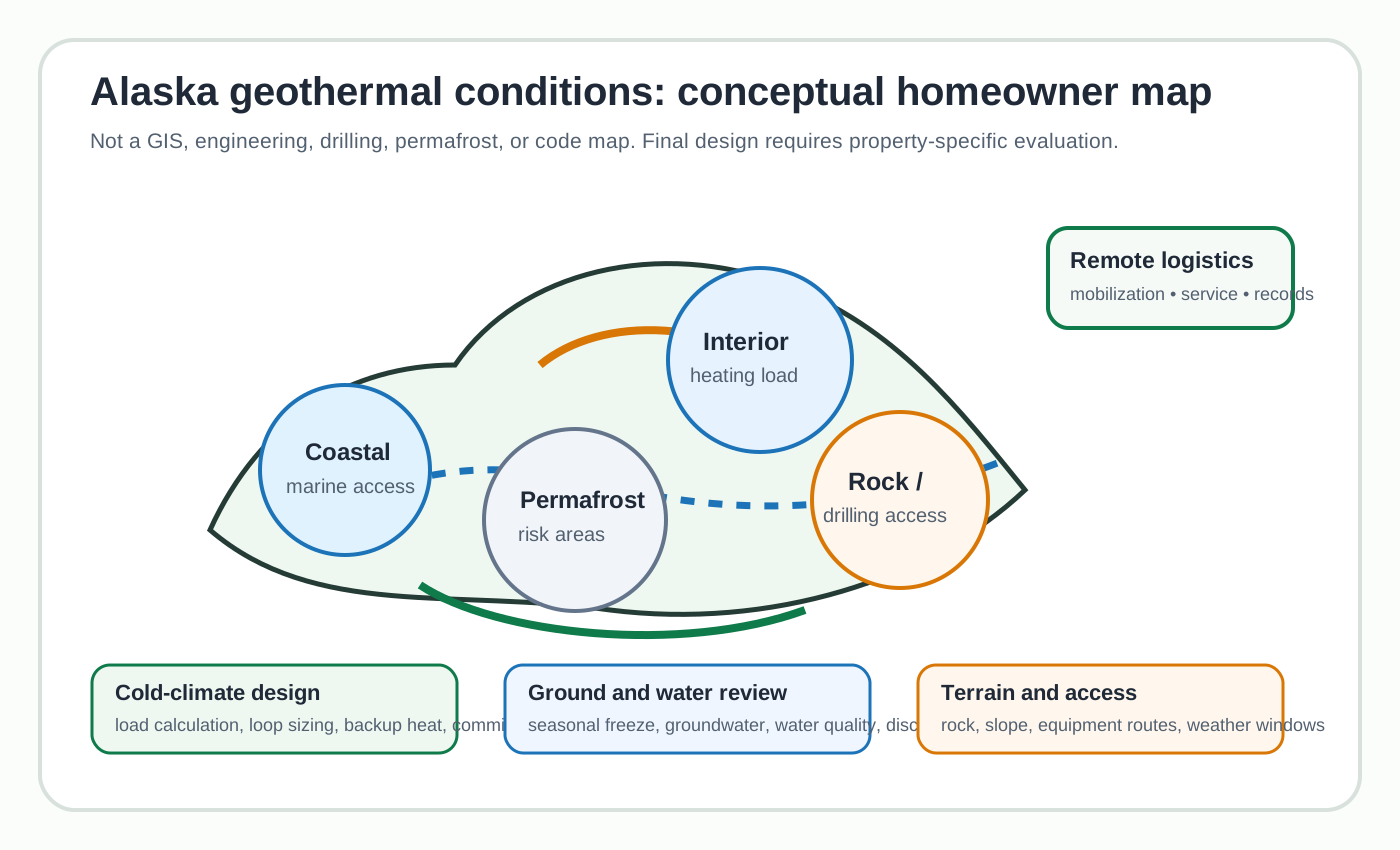
The diagram groups common Alaska geothermal planning themes: cold-climate design, permafrost caution where relevant, rock and drilling access, coastal and interior differences, groundwater and water-body questions, and remote logistics. It deliberately avoids county or borough precision because a broad map cannot tell you whether one parcel is suitable for a horizontal loop, vertical loop, pond/lake loop, open-loop system, or specialized well concept.
A serious proposal should translate these broad themes into a site record: home load, distribution review, property constraints, bore or trench access, ground assumptions, water-source assumptions where applicable, utility and septic/well separation, schedule constraints, and a documentation package.
Alaska climate and load considerations
Alaska geothermal design should treat climate as a design input, not a marketing headline. The state includes coastal, maritime, transitional, interior, arctic, mountain, and highly local microclimate conditions. Heating demand is often the dominant design concern, but the exact balance depends on location, elevation, wind exposure, home envelope, ventilation, windows, and distribution system.
For homeowners, the load calculation should answer practical questions: what winter design condition is being used, how the installer accounted for air leakage and insulation, whether the existing ducts or hydronic distribution can deliver comfort, whether backup or auxiliary heat is integrated responsibly, and what operating data will be checked at startup. Extreme winter design does not mean oversizing blindly. It means matching the building, equipment, loop field, controls, and backup strategy in a documented way.
Cold-climate commissioning should include flow and temperature readings, controls, backup heat staging, and homeowner settings. The installer should explain what is normal, when to call for service, and what records the homeowner should keep for future troubleshooting.
Alaska soil, geology, terrain, and water considerations
Alaska ground conditions vary widely. Some properties may have glacial deposits, organic soils, bedrock, steep terrain, drainage limitations, wetlands, gravel, fill, seasonal frost, or permafrost concerns. A homeowner should not assume that a loop type is practical simply because a neighbor installed geothermal or because a national diagram shows it neatly.
Soil and geology affect trench stability, drilling assumptions, grout or backfill, equipment access, spoils, bore spacing, restoration, and long-term records. Permafrost or permafrost-risk conditions require special caution because ground disturbance and heat exchange can interact with frozen ground in ways that need professional review. Water-source systems require additional review of groundwater quantity, chemistry, filtration, discharge or return, freezing exposure, and local requirements.
The right installer conversation should sound specific: what is known, what is assumed, what still needs verification, and what would cause the recommendation to change. The wrong conversation sounds absolute: “Alaska requires vertical loops,” “open-loop is always easiest,” or “permafrost does not matter here” without site evidence.
Alaska geothermal installation process using the national 13-step framework
The same 13-step framework from the national guide applies in Alaska, but each step needs cold-climate, terrain, frozen-ground, water, access, and serviceability questions added to it.
1. Project goals and home suitability

Alaska projects should start with the homeowner’s winter comfort goals, existing heating system, distribution type, service expectations, and property access. A retrofit in Anchorage, Fairbanks, Juneau, the Mat-Su area, the Kenai Peninsula, or a remote community can involve very different constraints even when the heat pump concept is the same. The first meeting should not be a sales pitch for one loop type. It should document whether the home is occupied year-round, how it performs in cold weather, whether envelope work is planned, what backup heat already exists, and how crews would reach the site.
why it matters: Alaska is heating-dominant in many locations, and an underspecified project can leave the homeowner dependent on emergency backup operation or difficult service calls. what homeowners should ask: Which comfort problems are you designing around, and what would cause you to recommend delaying geothermal until envelope or distribution issues are corrected? red flags: choosing a loop before discussing the house, treating remote access as an afterthought, or promising one standard package for all Alaska homes. good installers usually document: existing equipment, heating complaints, winter expectations, site access, and a plan for evaluating the home before final design.
2. Load calculation and energy analysis

A room-by-room load calculation is central in Alaska because heating loads often drive the design conversation. The calculation should use local design conditions, building envelope assumptions, window areas, infiltration, ventilation, additions, and distribution performance. The installer should also explain how the geothermal equipment, loop field, and any backup or auxiliary heat will work together during cold periods rather than relying on vague equipment sizing.
why it matters: square footage alone is not enough for cold-climate design. what homeowners should ask: What outdoor design temperature, envelope assumptions, and distribution limits are you using? red flags: sizing by prior fuel use alone, dismissing room-by-room loads, or not explaining backup heat staging. good installers usually document: load summary, assumptions, equipment capacity, loop design inputs, and where auxiliary heat may operate.
3. Site evaluation

Alaska site evaluation should look beyond yard size. The installer should consider seasonal ground freeze, permafrost risk where relevant, slope, drainage, rock or shallow bedrock, bore or trench access, tree and driveway protection, utilities, septic or well locations, snow storage, equipment staging, and whether the site can be serviced later. On remote parcels, logistics can be as important as geology.
why it matters: outdoor work is often the hardest part of an Alaska project. what homeowners should ask: Where will rigs, trenchers, pipe, grout, spoils, and restoration work be staged, and how does weather affect the schedule? red flags: no access map, no winter or shoulder-season plan, or no discussion of permafrost/frozen-ground risk in relevant areas. good installers usually document: sketch layout, constraints, assumptions, and needed follow-up evaluation.
4. Loop-type screening

Loop screening should compare realistic options instead of assuming one answer statewide. Vertical closed loops may be relevant where land is limited, rock is manageable, or deep drilling is preferable to extensive excavation. Horizontal loops may fit some accessible parcels with suitable land and soil. Pond or lake loops require a suitable water body, stable depth, permissions, and protection from damage. Open-loop or standing-column ideas require water-quality, flow, discharge/return, geology, and regulatory review.
why it matters: Alaska’s climate, land access, permafrost, rock, water, and remoteness can change the practical option set. what homeowners should ask: Which options were ruled out and why? red flags: universal claims, no explanation of rejected loop types, or assuming a well or lake automatically solves design. good installers usually document: decision path, site constraints, and remaining uncertainties.
5. Equipment and system design review

The indoor design should match Alaska heating needs and the existing distribution system. Ducted systems may need airflow and return-air review. Hydronic or radiant systems may require careful temperature compatibility review. Mechanical rooms need service clearance, condensate and drain planning, electrical integration, controls, and freeze-protection thinking where piping or equipment could be exposed to cold areas.
why it matters: the ground loop cannot overcome poor indoor integration. what homeowners should ask: Will my ducts, hydronic distribution, thermostat strategy, electrical capacity, and mechanical-room layout support the proposed geothermal equipment? red flags: ignoring existing distribution, leaving backup heat undefined, or not explaining service access. good installers usually document: equipment model, capacity, flow/airflow requirements, controls, and integration scope.
6. Proposal review and scope definition

The proposal should define scope in plain English: load basis, loop type, drilling or trenching scope, indoor equipment, backup heat integration, electrical responsibility, permits, utility locating, restoration, testing, commissioning, warranties, exclusions, and documentation. In Alaska, it should also explain weather windows, mobilization, remote logistics where relevant, and who handles surprises such as rock, groundwater, frozen-ground conditions, or access limitations.
why it matters: vague proposals create disputes when conditions are difficult. what homeowners should ask: What is included, what is excluded, and what conditions could change the scope? red flags: unclear drilling responsibility, no commissioning record, no site-specific assumptions, or pressure to sign before evaluation. good installers usually document: written assumptions, change-order triggers, and records delivered after startup.
7. Permits, utility locating, and schedule planning

Permitting and scheduling are not paperwork details; they shape the job. Alaska homeowners should ask who handles utility locating, well or water-source questions, electrical permits, local requirements, access permissions, and inspection coordination. Weather, road access, marine or air freight, thaw seasons, and contractor availability may all affect timing without changing the core technical design.
why it matters: drilling or trenching without planning can damage utilities, delay work, or create unsafe conditions. what homeowners should ask: What permits and utility locates are required before outdoor work begins? red flags: starting outdoor work without locates, unclear permit responsibility, or no weather contingency. good installers usually document: roles, schedule, utility-locate timing, and inspection checkpoints.
8. Drilling, trenching, or water-source preparation

Outdoor preparation in Alaska can involve drill rigs, trenchers, pipe staging, grout or backfill materials, access mats, snow or mud planning, spoils handling, and environmental protection. If groundwater or a water body is discussed, the installer should explain source evaluation, water quality, discharge or return approach, and local rule review before treating it as feasible.
why it matters: outdoor conditions can make or break the project schedule and design. what homeowners should ask: How will equipment reach the work area, where will spoils go, and what happens if rock, water, or frozen ground differs from assumptions? red flags: no staging plan, no water-source caution, or treating the homeowner as responsible for coordinating specialized work without written scope. good installers usually document: site logistics, work boundaries, and contingency rules.
9. Loop installation and field assembly

Closed-loop installation should connect circuits, headers or manifolds, supply and return piping, wall penetrations, insulation where needed, and protected routing back to the mechanical space. In Alaska, the installer should explain burial, freeze-protection, pipe protection, backfill or grout, and how the as-built loop field will be recorded for future owners and service technicians.
why it matters: once underground work is covered, records become essential. what homeowners should ask: How will the loop field be mapped and protected from future excavation or frost-related damage? red flags: no as-built map, unclear header location, or vague backfill/grout practices. good installers usually document: circuit layout, depth/bore assumptions, materials, pressure-test points, and final map.
10. Fusion, flushing, pressure testing, and fluid setup

Quality control should include fusion or connection documentation, flushing, air removal, pressure testing, flow verification, and fluid setup appropriate for the system design. Cold-climate projects should not treat freeze protection or flow readings as incidental details. The homeowner should receive a record rather than a verbal assurance that the buried system is fine.
why it matters: hidden underground systems must be tested before they are relied on through winter. what homeowners should ask: Will I receive pressure-test and startup readings? red flags: no written test record, no fluid explanation, or testing done only after concealment. good installers usually document: test pressures, duration, flow readings, antifreeze or fluid setup where used, and corrective actions.
11. Indoor equipment and distribution integration

Indoor integration includes the geothermal heat pump, ductwork or hydronic distribution, pumps, controls, electrical work, condensate management, service clearance, and backup heat. In Alaska homes, the backup strategy is not a failure of geothermal; it is part of a responsible cold-climate design conversation when extreme conditions or outage resilience matter.
why it matters: homeowners experience the indoor system, not the loop field. what homeowners should ask: How will backup heat stage, and what settings or alarms should I understand? red flags: equipment placed where it cannot be serviced, no backup integration, or no distribution review. good installers usually document: indoor scope, control sequence, airflow or water-flow data, electrical responsibility, and service access.
12. Controls, startup, and commissioning

Commissioning should verify that the design operates as intended. The technician should check controls, flow, entering and leaving water temperatures, air or hydronic distribution, backup heat staging, safety devices, and homeowner settings. Alaska homeowners should ask how the system will be monitored during early operation and what readings indicate normal cold-weather performance.
why it matters: startup is where design assumptions meet real operation. what homeowners should ask: What commissioning checklist will I receive, and who reviews early-season performance? red flags: “we turned it on” as the only startup explanation, no readings, or no backup staging test. good installers usually document: commissioning data, settings, operating ranges, and follow-up expectations.
13. Homeowner walkthrough, documentation, and maintenance expectations

The handoff should include manuals, warranty information, commissioning readings, loop map or bore/trench record, backup heat explanation, maintenance expectations, filter or pump information, service contacts, and any site limitations. Remote Alaska homeowners should pay extra attention to serviceability, spare parts, response times, and how future owners or technicians will understand the system.
why it matters: documentation protects the homeowner long after the installation crew leaves. what homeowners should ask: What records will I receive, and how should I store them for future service? red flags: no as-built map, no commissioning sheet, no explanation of backup heat, or no long-term service plan. good installers usually document: owner packet, maintenance checklist, warranty boundaries, and service pathway.
Loop type guidance for Alaska
No loop type is automatically best for Alaska. A good installer should explain why a loop type fits the home, site, ground conditions, water conditions where relevant, access, maintenance expectations, and local requirements.
Horizontal closed loop in Alaska

Horizontal closed loops may be worth discussing where a property has accessible land, suitable soils, manageable seasonal ground conditions, safe separation from utilities, wells, septic, structures, trees, and realistic restoration expectations. In Alaska, the conversation should be cautious because excavation, frozen ground, shallow rock, wetlands, slope, and remote logistics can change practicality. Homeowners should ask where trenches would go, what soil and frost assumptions are being used, how backfill and surface restoration will be handled, and how future excavation will avoid the loop field. Red flags include a sketch-free proposal, no discussion of ground freeze, or assuming acreage alone makes horizontal loops easy.
Vertical closed loop in Alaska

Vertical closed loops may be evaluated when land is limited, horizontal excavation is impractical, or drilling logistics are clearer than large-scale trenching. They still require drilling access, subsurface review, grout and borehole practices, loop-field spacing, spoils handling, and professional design. In Alaska, rock, access routes, weather windows, and mobilization can be central. Homeowners should ask who performs drilling, what conditions are assumed, how boreholes are grouted or sealed, and what happens if drilling differs from expectations. Red flags include no drilling subcontractor responsibility, no borefield rationale, or no as-built record.
Pond or lake closed loop in Alaska

A pond or lake closed loop is a sealed loop placed in a suitable water body, not an open discharge into the water. It may be considered only where the water body has adequate depth, stability, permission, routing, protection, environmental review, and access for installation and future service. Alaska lakes and ponds can involve ice, seasonal access, shore stability, ownership, and protection questions. Homeowners should ask how suitability will be verified and what permissions are needed. Red flags include “you have water, so it will work,” no depth review, or unclear protection from ice, anchors, or shoreline disturbance.
Open-loop well system in Alaska

Open-loop systems use groundwater rather than sealed loop fluid, so they require water quantity, water quality, well construction, filtration, heat exchanger protection, discharge or return rules, and ongoing maintenance review. In Alaska, groundwater availability, chemistry, freezing exposure, well access, remote service, and local rules can make this a specialized option rather than a shortcut. Homeowners should ask for water-quality testing, flow requirements, discharge/return explanation, and maintenance expectations. Red flags include treating an existing domestic well as automatically suitable, ignoring mineral or sediment risk, or leaving discharge responsibility vague.
Standing column well in Alaska

Standing column wells draw from and return water to the same deep bedrock well and are regional, specialized systems. They should be discussed only with cautious, site-specific language where local geology, water quality, permitting, and experienced design support the concept. For many Alaska properties this may not be a practical or commonly proposed option. Homeowners should ask whether the installer has documented local experience and what alternatives were compared. Red flags include presenting standing-column wells as universal, skipping water-quality review, or failing to explain bleed/discharge implications if relevant.
Alaska site evaluation checklist
Home and load
- Room-by-room load calculation
- Local winter design assumptions
- Envelope, leakage, windows, and ventilation notes
- Existing heating and backup equipment
Ground and terrain
- Soil or surficial material screening
- Rock, shallow bedrock, and drilling access
- Seasonal frost or permafrost risk where relevant
- Slope, drainage, wetlands, and restoration limits
Property constraints
- Utilities, septic, wells, driveways, trees, and structures
- Snow storage, equipment staging, and future excavation
- Access routes for rigs or trenchers
- Remote mobilization and weather-window planning
Water-source review
- Groundwater quantity and water quality if open-loop is discussed
- Discharge or return approach and local requirements
- Pond/lake depth, ownership, permissions, and protection
- Freeze exposure and long-term maintenance
Alaska proposal comparison checklist

| Proposal item | What a complete proposal should include | Why it matters in Alaska | Questions to ask | Red flags |
|---|---|---|---|---|
| Load calculation | Room-by-room basis, local design assumptions, envelope inputs, and distribution notes. | Heating-dominant operation and extreme winter conditions can expose weak sizing assumptions. | What winter design condition and home assumptions did you use? | Square-foot sizing or verbal sizing only. |
| Loop type rationale | Why horizontal, vertical, pond/lake, open-loop, or specialized well concepts were accepted or rejected. | Alaska sites vary by land, rock, permafrost risk, water, and access. | Which options did you rule out and why? | One loop type promoted for every site. |
| Subsurface assumptions | Soil, rock, frost, permafrost, groundwater, and drilling or trenching assumptions. | Unknown subsurface conditions can change feasibility and execution. | What happens if ground conditions differ? | No contingency explanation. |
| Remote logistics | Mobilization, freight, weather windows, service response, spare parts, and crew access where relevant. | Remote properties need long-term service planning, not just installation planning. | How will future service be handled? | No serviceability plan. |
| Backup heat integration | Controls, staging, existing equipment, capacity limits, and homeowner settings. | Backup heat may be part of a responsible Alaska design. | When should backup heat operate? | Backup heat ignored or unexplained. |
| Testing and commissioning | Pressure tests, flushing, flow, temperatures, controls, backup staging, and startup records. | Cold-climate performance should be documented before the homeowner relies on the system. | What readings will I receive? | No written commissioning data. |
| As-built records | Loop map, bore/trench notes, photos, manuals, warranty, service contacts, and owner instructions. | Future service may depend on clear records, especially on remote or difficult sites. | When will I receive the owner packet? | No as-built map or records. |
Alaska homeowner questions checklist
Load calculation and cold-climate design
- What winter design assumptions are you using?
- How does the equipment match the room-by-room load?
- How is backup heat staged and explained?
Site evaluation
- What soil, rock, slope, drainage, frost, or permafrost conditions may matter here?
- What access routes and staging areas are required?
- What still needs verification before final design?
Loop type
- Why is this loop type recommended for my property?
- Which alternatives were considered?
- What conditions would change the recommendation?
Drilling, trenching, or water-source work
- Who performs the specialized outdoor work?
- How are spoils, restoration, water, rock, or frozen ground handled?
- What permissions or local requirements apply?
Indoor system
- Will existing ducts or hydronic distribution support geothermal operation?
- Where will equipment be located for safe service?
- How will controls and backup heat be explained?
Testing, warranty, and documentation
- Will I receive pressure-test, flow, temperature, and startup records?
- Will I receive an as-built loop map?
- Who services the system if conditions are remote or seasonal?
Alaska-specific red flags

- No room-by-room load calculation or winter design explanation.
- Loop type selected before site and home evaluation.
- No permafrost or frozen-ground discussion in an area where it may matter.
- Vague drilling, trenching, water-source, or remote-mobilization responsibility.
- No backup or auxiliary heat strategy for cold weather.
- Open-loop proposal without water-quality, flow, discharge/return, and rule review.
- No pressure-test, commissioning, or as-built documentation promised in writing.
- Claims that one loop type is always best in Alaska.
- Pressure to sign before subsurface assumptions, serviceability, and exclusions are written down.
Recommended Alaska condition guide links
Use these condition guides with this main Alaska page for deeper evaluation of the most common Alaska installation conditions. Each page is written for homeowner proposal review and site-specific installer questions.
Alaska-specific planning notes before comparing installers
Cold-weather performance should be explained before equipment is selected
An Alaska proposal should not jump from “geothermal is efficient” to an equipment model without explaining how the home will be served during the coldest expected conditions. The homeowner should understand the design load, the expected role of the ground loop or water source, the indoor distribution limits, and the backup or auxiliary heat strategy. That does not mean every project must be oversized for rare extremes; it means the proposal should define the assumptions clearly enough that the homeowner can compare installers on design quality rather than confidence alone.
Permafrost language should be cautious and local
Permafrost is a real concern in parts of Alaska, but it is not useful for a contractor to treat the whole state as one uniform frozen-ground condition. The right question is whether the specific property has permafrost, ice-rich ground, thaw-sensitive soil, drainage issues, or other geotechnical concerns that can affect drilling, trenching, heat exchange, or restoration. If the answer is uncertain, the proposal should say what additional evaluation is needed before final design. A homeowner should be wary of both extremes: dismissing permafrost without evidence and using permafrost as a generic scare tactic.
Remote service planning belongs in the first conversation
Remote or hard-to-reach properties need more than an installation plan. They need a service plan. Ask how the installer will handle parts, diagnostics, routine maintenance, emergency response, technician travel, and documentation for a future service provider. A system that looks reasonable on paper can become frustrating if nobody has the records, access, or practical ability to service it after winter operation begins. For seasonal roads, marine access, air freight, or long travel distances, written responsibilities matter.
Open-loop and water-source ideas need evidence
Groundwater, lakes, ponds, and coastal or island settings can make water-source ideas tempting, but water availability is not the same as geothermal suitability. Open-loop systems need water quantity, water quality, filtration, heat exchanger protection, discharge or return approval, freeze protection, and maintenance planning. Pond or lake loops need depth, stability, ownership or permission, routing, anchoring or protection, and environmental review. Homeowners should ask for the evidence used to support any water-source recommendation.
Documentation is part of resilience
In Alaska, as-built documentation is more than a nice extra. A future owner, local service technician, electrician, excavation contractor, or emergency backup-heat technician may need to understand where the loop field is, how the system was commissioned, what fluid or water conditions were used, what backup controls were configured, and who is responsible for warranties. Ask for a sample owner packet before signing. If an installer cannot describe the records you will receive, the proposal is not complete enough for a demanding site.
How to compare two serious Alaska proposals
When two installers both appear qualified, compare the traceability of their recommendations. Which proposal connects the load calculation to the equipment choice? Which one ties loop type to actual site observations? Which one names uncertainties instead of hiding them? Which one explains the backup heat sequence, drilling or trenching responsibility, water-source caution, remote service plan, and commissioning deliverables? The better proposal usually teaches you how the design decision was made, not just what the recommended system is.
What homeowners should not expect from this guide
This guide does not tell you how to drill, trench, fuse pipe, wire equipment, modify wells, set controls, or commission a system. It is intentionally a homeowner evaluation guide. Use it to ask better questions, compare written scopes, recognize incomplete proposals, and decide whether an installer is treating your Alaska property as a specific site rather than a generic opportunity.
Final homeowner boundary before signing
Before signing, ask the installer to walk you through the design in the same order this guide uses: home load, site conditions, loop screening, indoor integration, proposal scope, outdoor work, testing, commissioning, and documentation. If the explanation skips from a quick site visit to a firm recommendation without showing the decision path, slow the process down. Alaska properties can be demanding, and a careful installer should be comfortable explaining uncertainty, follow-up evaluation, and the limits of the current information. The strongest proposal is not the one that sounds most certain; it is the one that shows how the installer will verify assumptions before burying pipe, drilling boreholes, modifying water systems, or relying on backup heat in winter. Ask for the explanation in writing, keep it with the owner packet, and use it as the baseline for future service conversations and maintenance reviews.
Internal links and next steps
If you are comparing geothermal installers for an Alaska property, use this guide with the national installation guide, the installer directory, and the quote request page.
Find geothermal installers in AlaskaRequest geothermal quotesBrowse geothermal installersView directory map
For the broader installation framework, return to the national geothermal installation guide.
Alaska geothermal installation FAQ
Is geothermal practical for Alaska homes?
It can be practical for some Alaska homes, but feasibility is highly site-specific. The installer must evaluate the home load, winter design assumptions, loop or water-source options, soil or rock, access, permafrost risk where relevant, backup heat strategy, and long-term serviceability before making a recommendation.
Does Alaska require a different geothermal design than warmer states?
The basic geothermal technology is the same, but Alaska projects usually deserve a stronger cold-climate design conversation: heating-dominant loads, extreme winter operation, loop-field assumptions, distribution performance, backup or auxiliary heat, and commissioning records all matter.
Can geothermal loops be installed in permafrost?
Permafrost or permafrost-risk sites require professional site-specific evaluation. Frozen ground, ground disturbance, thaw settlement risk, drainage, and geotechnical conditions can affect feasibility and design. Homeowners should not accept a generic answer without local evidence.
Which loop type is best in Alaska?
There is no statewide best loop type. Vertical closed loops may be evaluated where land is limited or trenching is impractical; horizontal loops may fit some larger accessible parcels; pond or lake loops require a suitable water body and permissions; open-loop and standing-column concepts require careful water, geology, and rule review.
What should Alaska homeowners ask before signing a geothermal proposal?
Ask for the load calculation basis, winter design assumptions, loop-type rationale, site-evaluation notes, drilling or trenching responsibility, permafrost or frozen-ground screening where relevant, backup heat integration, commissioning readings, service plan, and as-built documentation.
Sources and references
- Alaska — State Climate Summaries 2022 — NOAA National Centers for Environmental Information. Used for statewide climate context, extreme winter conditions, precipitation variation, and regional climate differences relevant to heating-dominant geothermal design.
- Alaska Climate Research Center — University of Alaska Fairbanks. Used as Alaska-specific climate background for homeowner discussion of cold climates, interior/coastal differences, and seasonal heating expectations.
- Permafrost and Frozen Ground — U.S. Geological Survey. Used for cautious explanation of permafrost as a site-specific frozen-ground condition rather than a simple statewide rule.
- Alaska Division of Geological & Geophysical Surveys — State of Alaska Department of Natural Resources. Used for Alaska geology and geologic-hazards context, including why local subsurface review matters before drilling or excavation.
- Web Soil Survey — USDA Natural Resources Conservation Service. Used for parcel-level soil screening context and to emphasize that broad statewide statements cannot replace a property-specific soil review.
- Geothermal Heat Pumps — U.S. Department of Energy Energy Saver. Used for national geothermal heat-pump fundamentals, loop-type context, and homeowner education framing.
- Geothermal Heat Pumps — ENERGY STAR. Used for general heat-pump and quality-installation context without making brand-specific recommendations.
Homeowner Installation Planning Checklist
Use this checklist with the existing Alaska guide context. It organizes contractor questions; it does not replace parcel-level investigation or current local requirements.
Site & ground conditions
- State context: Homeowner-focused Alaska geothermal installation guide covering cold climate, heating loads, permafrost concerns, rocky terrain, drilling access, loop options, installer questions, and proposal red flags.
- Cold Climate: Ask how local winter design conditions, elevation or exposure affect the load calculation, loop sizing, controls and auxiliary-heat plan.
- Permafrost: Ask the contractor to show how this documented state condition changes the site evaluation, system design, scope or commissioning plan.
- Loop Options: Ask the contractor to compare feasible horizontal, vertical, water-body and any proposed open-loop option using documented site and ground evidence.
- Property conflicts: Mark utilities, wells, septic components, drainage, easements, structures and protected landscaping before fixing a loop location.
- Access and restoration: Document equipment access, staging, spoils, dewatering where relevant, weather limits and responsibility for restoring disturbed surfaces.
System design
- Load basis: Request a room-by-room heating and cooling load calculation tied to the actual envelope, ventilation, occupancy and local design weather.
- Loop rationale: Require the proposal to explain the selected loop type, sizing assumptions, layout, materials, pumping and why alternatives were rejected.
- Indoor system: Confirm that ducts or other distribution, airflow, electrical capacity, condensate handling, controls and auxiliary heat were evaluated.
Proposal review
- Normalize scope: Compare equipment model and capacity, loop materials, drilling or excavation, grouting or backfill, electrical, ducts, permits, disposal and restoration.
- Define responsibilities: Identify every subcontractor, permit owner, commissioning party, warranty provider, exclusion, allowance and changed-condition trigger.
- Commissioning: Require recorded airflow, temperatures, loop flow or pressure, pump and control operation, auxiliary heat checks and homeowner instruction as applicable.
Before work begins
- Keep the signed scope, load calculation, site and loop drawings, equipment data, permit plan, schedule, payment terms, warranties and change-order process together.
- Confirm utility marking, access dates, protection of wells and septic systems, restoration limits, startup records and the final documents the contractor will deliver.